

Bangladesh: Agreement Reached to Raise Textile Workers' Minimum Wage After a Month of Protests and Strikes
Representatives of workers and employers in Bangladesh's textile industry reached an agreement to raise the minimum wage by more than a third, prompting trade unions to call for an end to weeks of disruptive strikes.

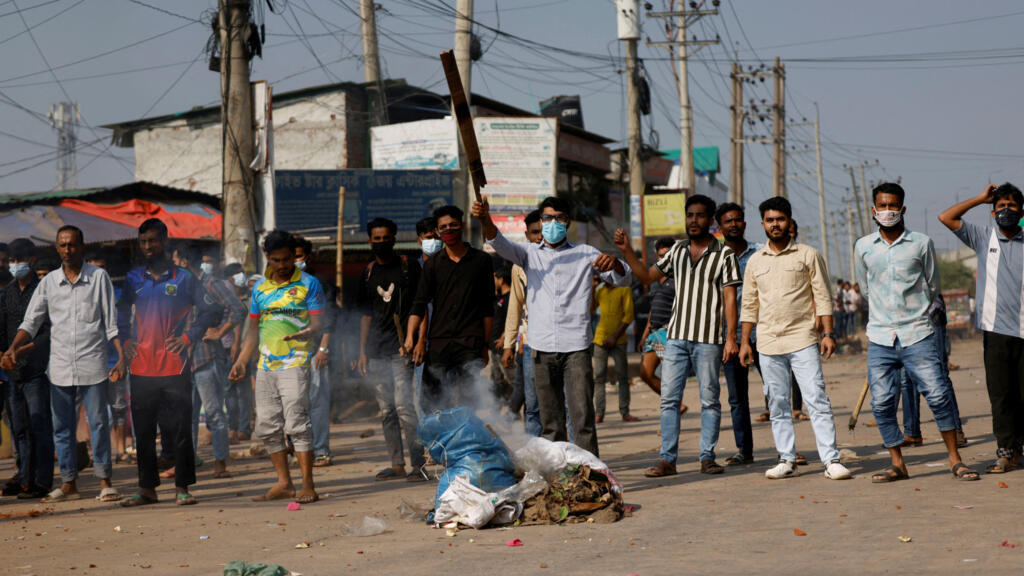
- Entry-level textile workers' minimum wage will increase to 17,000 taka (around €124) per month starting in January.
- Trade unions accepted the hike and called for an end to the strike, despite falling short of their demanded 140% increase.
- Protests in the sector caused estimated losses of $428 million in a country that supplies major European and Western apparel markets.
On Wednesday, November 25, representatives of workers and employers in Bangladesh's textile industry reached an agreement to raise the minimum wage by more than a third. Although the increase fell short of the workers' previously raised demands, it prompted trade unions to call for an end to the strike and an immediate resumption of work.
Since the beginning of the month, the country has witnessed widespread work stoppages and massive demonstrations across this vital sector of the national economy, demanding better pay amid severe inflation and rising global energy prices. Following a long night of talks within a dedicated board, both sides agreed on a 36% increase in the minimum wage for entry-level workers.
An Increase Below Expectations and Union Acceptance
Judge Syed Azad Subhani, head of the board, announced that the majority agreed to set a minimum monthly wage of 17,000 taka (equivalent to €124), to take effect next January. Workers had been demanding an increase of up to 140% to raise the minimum income from 12,500 taka (€91) to 33,000 taka (€232) to cope with the rising cost of living, as the annual inflation rate reached 8.2% in October, according to official statistics.
In a statement to the press, workers' representative Babul Akhter said: "We cannot be completely satisfied, but the decision was made by the board," calling on workers to resume work and urging factory owners to implement the decision as soon as possible. For his part, Kamrul Hasan, a leader of the "Ekota Garments Sramik" union, explained that workers must consider the conditions of small and medium-sized enterprises unable to pay more, anticipating an imminent end to the unrest.
Clashes and Losses for a Sector Feeding Western Markets
Although Mehdi Amin, the Prime Minister's social affairs advisor, welcomed the agreement and called for calm and avoiding rumors, workers in the Gazipur industrial area near the capital, Dhaka, pointed out that the new wage does not cover the sharp rise in commodity prices, while affirming that the majority wishes to return to work to prevent further repercussions.
The labor protests had initially seen violent clashes between protesters and security forces, who used tear gas and stun grenades to clear roadblocks in Gazipur. The primary association of textile factory owners estimated the strike-related losses at more than $428 million.
Bangladesh is the world's second-largest apparel exporter, with the sector employing around four million workers across roughly 4,000 factories and generating more than 80% of the country's foreign currency earnings by manufacturing garments for major brands and retail chains in Europe and the United States, amid significant operational challenges and international competitive pressure.
Source: RFI
Comments (0)
You must log in to comment on articles.
Log in Sign upBe the first to comment on this article.