

Paris Criticizes Major Retailers' Boycott of Trade Talks with the Food Industry
The French government has condemned major supermarket chains for adopting an 'empty chair' policy during annual trade talks at Bercy, describing the boycott as counterproductive and contradictory.

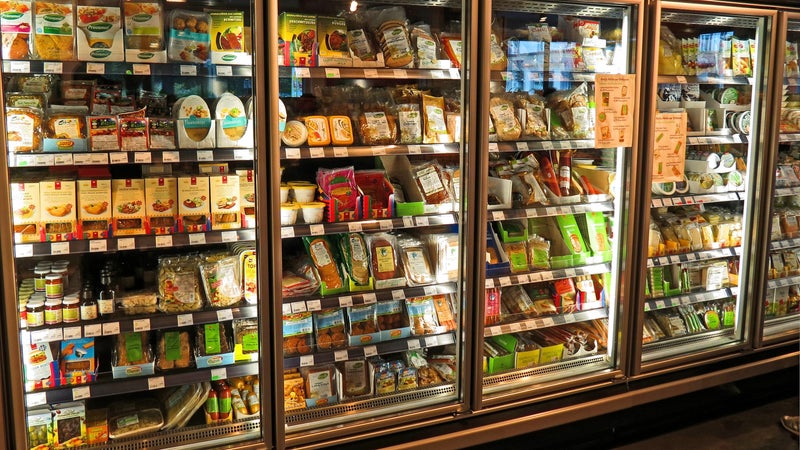
- The French government describes major retailers' boycott of the 'Bercy' meeting as 'pointless' and 'contradictory.'
- New agricultural legislation has already addressed the demand to expedite negotiations for SMEs before January 31.
- Paris calls for a 'responsibility pact' to ensure inflation-driven revenues support farmers and local producers.
The French government has described the "empty chair" policy adopted by major retail chains during the first preparatory meeting for the upcoming commercial negotiations round, held on Monday, November 2, at the Ministry of Economy and Finance (Bercy), as "regrettable" and "disappointing," further characterizing it as "pointless," "counterproductive," and marked by "contradiction and strangeness."
This sharp tone came from the entourage of Minister of Agriculture and Food Annie Genevard and the Minister in charge of Trade and Purchasing Power Serge Papin, following the decision announced by the Federation of Commerce and Distribution (FCD) and the "Lidl" chain ahead of the weekend; a move that heightened tensions in this traditional annual gathering between distributors and national brand suppliers.
Demands Addressed by Law
The government deemed the distributors' stance incomprehensible, pointing out that the "two primary demands" the federation made prerequisites for attendance had already been included in the agricultural emergency law adopted last summer, although it is still awaiting executive decrees for full implementation.
Major retail chains insist on the necessity of differentiated treatment between small and medium-sized enterprises (SMEs) and multinational corporations. The executive branch clarified that the law already recognizes this distinction; it brings forward the commercial negotiation deadline—normally set for March 1—to January 31 for companies with a global turnover of less than 350 million euros, aiming to grant smaller businesses dedicated negotiation time, a mechanism previously tested in 2025.
Regarding transparency over agricultural raw material costs, the government confirmed that it is a prerequisite for triggering automatic price-revision clauses stipulated by law and agreed upon by both parties. However, the government currently rules out reopening provisions of the 2022 "Egalim" law, which allow manufacturers to merely declare the evolution of these costs and certify them via an independent third party, citing commercial confidentiality protections and an unfavorable parliamentary context.
Fair Distribution of Burdens and Prices
Despite the absence of major retail chain representatives, the meeting allowed for an assessment of external cost increases borne by farmers and industrial producers due to climate and geopolitical crises. Both ministries reaffirmed their objective that inflation reported by manufacturers and retailers must, first and foremost, benefit farmers and SMEs, calling for the conclusion of a "responsibility pact for a fair distribution of value."
A new meeting is scheduled for late November or early December to begin concrete discussions based on general terms of sale to be submitted by manufacturers in the coming weeks, providing an initial overview of requested price increases, with the government stressing that it does not intend to force distributors to attend.
Source: BFM TV


Comments (0)
You must log in to comment on articles.
Log in Sign upBe the first to comment on this article.