

Solving the Riemann Hypothesis with AI Sparks Scientific Debate: A Historic Breakthrough Without Full Human Comprehension
The global academic community is abuzz following the announcement that the Riemann Hypothesis has been solved using Anthropic's 'Claude' AI, delivering a massive 17.4-million-line proof that remains beyond immediate human comprehension.

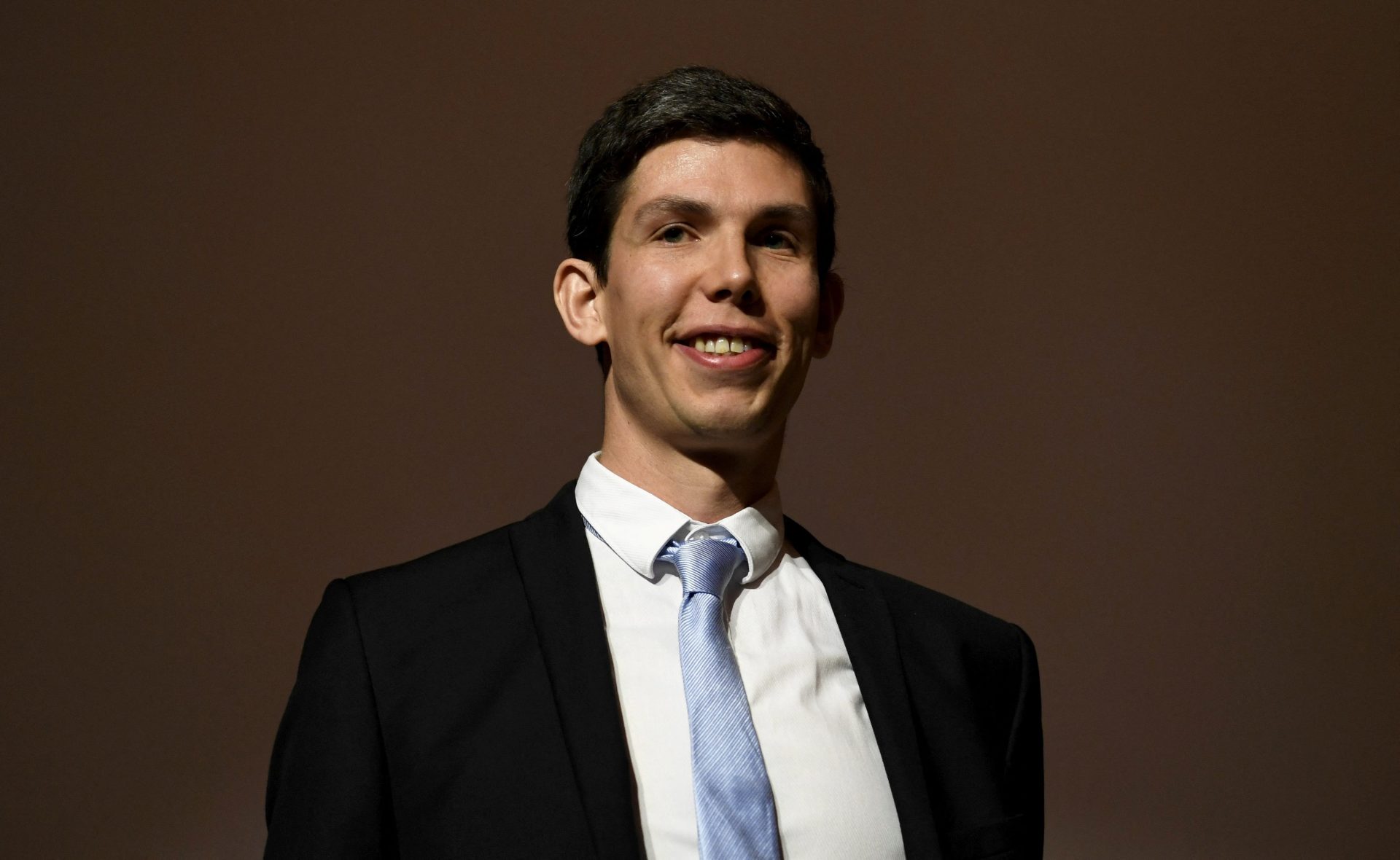
- Anthropic mathematical researcher Levent Alpoge announces a solution to the Riemann Hypothesis, open since 1859, assisted by the AI system 'Claude'.
- The proof, formulated in the 'Lean' programming language at roughly 17.4 million lines of code, has been verified through independent computational reviews.
- Fields Medalist James Maynard confirms the validity of the result while cautioning against the challenge of a lack of direct human understanding of machine-generated proofs.
Global academic and scientific circles experienced an epistemic earthquake following the announcement on November 20 of a solution to the 'Riemann Hypothesis'—one of the most complex open mathematical problems since its formulation in 1859, closely tied to the distribution mechanism of prime numbers. Mathematical researcher at Anthropic, Levent Alpoge, announced reaching the definitive proof of the problem with the assistance of the AI system 'Claude'.
A Massive Proof with Independent Computer Verification
The new proof was formulated using the mathematical programming language 'Lean' and spanned approximately 17.4 million lines of code. Despite the initial skepticism typically surrounding such major announcements, the proof was certified and its accuracy confirmed following independent reviews conducted by specialized programming communities such as 'Lean' and 'Mathlib', overseen by prominent experts including Andrew Sutherland, where the verification relied solely on the language's three standard axioms without any programmatic loopholes.
The Black Box Dilemma and the Absence of Human Understanding
The scientific community received this development with a mix of awe and epistemological concern. In press remarks, British Oxford University professor and 2022 Fields Medalist James Maynard (39) explained that the mathematical community has become convinced of the proof's correctness, yet faces an unprecedented situation: 'At present, no human being understands this proof in its entirety.'
Maynard pointed out that the standard for scientific proofs historically relied on peer review and the exchange of ideas to understand the deep underlying reasons for phenomena, whereas the new reality imposes two standards: the first is automated verification, which guarantees the result's correctness as a black box; the second is human alignment, which confers true meaning to the discovery. He added that the primary objective was not merely to know whether the hypothesis was true, but to understand the 'music and hidden structure' of prime numbers concealed within the zeros of the Riemann zeta function.
Profound Shifts in the Future of Research and Graduate Studies
Researchers and independent teams are currently working to deconstruct the massive code and translate it using AI tools into natural language text to facilitate comprehension of the deductive structure of the solution. This precedent opens new horizons and unprecedented challenges for researchers, students, and the new generation in exact sciences, with Maynard anticipating a golden age of rapid discoveries, contrasted by the decline of the lone-researcher paradigm grappling with a problem alone for years in laboratories and universities.
Source: L’Express

Comments (0)
You must log in to comment on articles.
Log in Sign upBe the first to comment on this article.