

"Signs of Civil War": Two French Researchers Warn of Severe Societal Division and Declining State Authority
Sorbonne philosophy professor Pierre-Henri Tavoillot and homeland security expert Éric Delbecque issue a grave warning regarding the internal situation in France, pointing to deep polarization and the erosion of the rule of law.

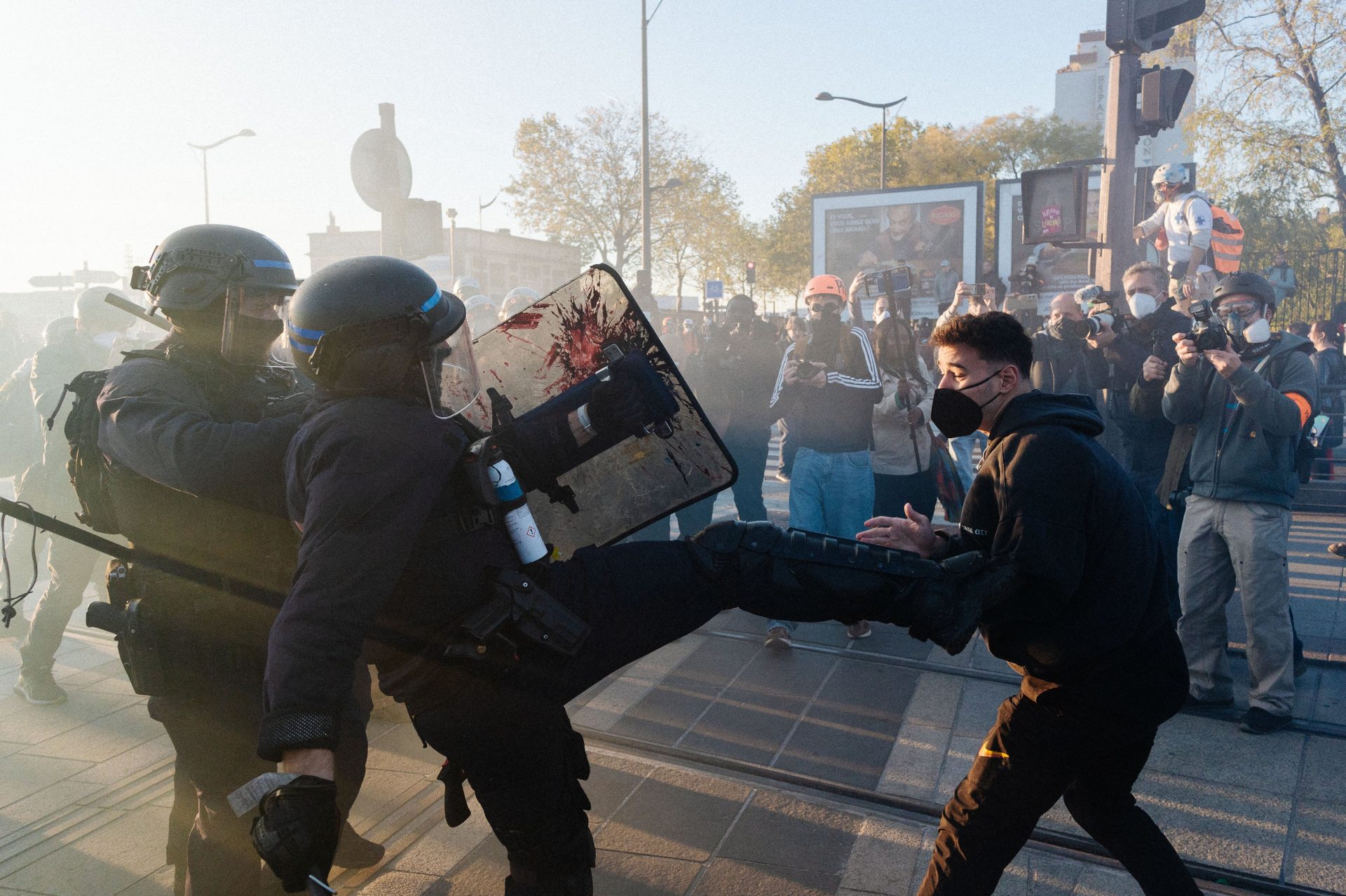
- Warning over an intersection between far-left currents and organized crime, alongside the state's declining ability to ensure the safety of individuals and property.
- A divided French landscape split into two camps incapable of dialogue: one justifying rebellion citing systemic racism, and the other demanding the restoration of institutional authority.
- Criticism of police directives urging shop owners to hire private security, fueling fears of rising vigilantism and self-defense in French cities.
Sorbonne University philosophy professor Pierre-Henri Tavoillot and homeland security expert Éric Delbecque have issued a grave warning regarding the trajectory of domestic affairs in France. They argue that the country is witnessing the gradual emergence of two opposing camps confronting each other in what resembles the "signs of a civil war," driven by escalating violence and the declining capacity of state institutions to enforce the rule of law.
Escalating Violence and Fears of Self-Defense Tendencies
The authors explained that the violent events of October 17 marked an alarming turning point in their nature and scale, revealing a notable convergence between far-left factions and conventional crime. They also pointed to the failure of the constitutional state to perform its primary duty: protecting individual freedoms, freedom of speech and assembly, securing property, safeguarding commerce, and ensuring citizens' safety.
The article placed the responsibility squarely on the political leadership overseeing security agencies rather than on the security forces themselves, expressing shock at instructions from the Paris Police Prefect advising merchants to hire private security and guard companies to protect their shops. The two researchers also warned against the return of individual "self-defense" manifestations in French cities, amid political rhetoric that justifies disrupting and assaulting public order.
Two Conflicting Bubbles and the Absence of Dialogue
According to the analysis, France is currently divided into two "warring bubbles" that share no common ground for mutual understanding. The first camp views violence as stemming solely from an authoritarian state and a society it accuses of racism, "Islamophobia," patriarchy, entrenching inequality, and serving the wealthy at the expense of public causes like the climate—leading them to view violent rebellion as a legitimate means to impose a new reality.
Conversely, the second camp focuses on the danger of attacks directed against the state and social cohesion, amid what it perceives as rising separatist tendencies and the targeting of institutions and shared foundations such as schools and education. For this group, the absolute priority lies in restoring state authority and prestige and countering any laxity in law enforcement.
A Crisis of Trust Threatening Public Stability
Tavoillot and Delbecque noted that the vital relationship between the authorities and society has broken down: the state has grown suspicious of society, suffocating it with excessive regulatory standards, while society views with deep suspicion a state perceived as powerless on core issues yet overly rigid on marginal matters.
The two authors stressed the imperative of focusing public and political debate in France on ways to restore state authority and rebuild the fabric of societal trust. They emphasized that the lack of clear solutions to these dilemmas could push this dangerous division toward further widening and escalation, to the detriment of stability and peaceful coexistence.
Source: L’Express



Comments (0)
You must log in to comment on articles.
Log in Sign upBe the first to comment on this article.