

Is the End of Free AI Services Approaching After Becoming a Staple of Daily Life?
After becoming indispensable in daily life, major AI developers are scaling back free features and turning to subscriptions and ads to curb massive operational costs.

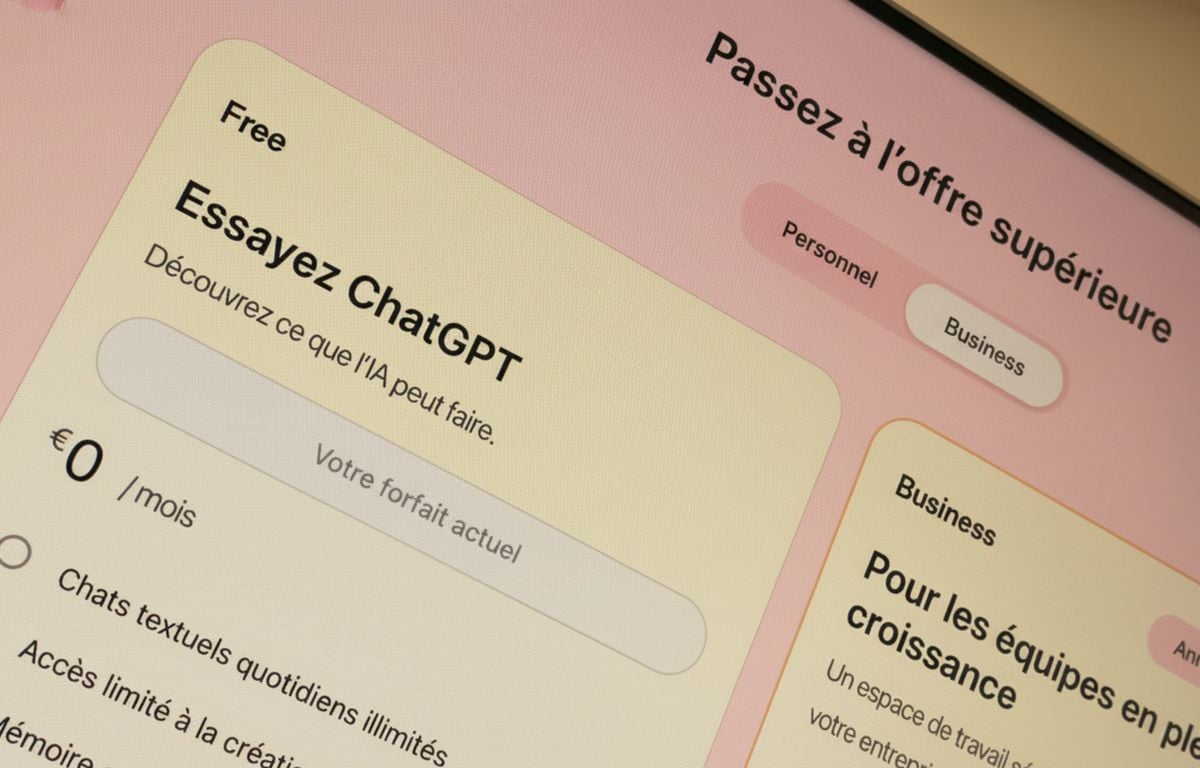
- Accelerated reduction of high-cost free features, such as image and video generation, limiting them to paid subscriptions.
- Massive server operating costs and the push for profitability are prompting major companies like OpenAI and Anthropic to shift their business models.
- Complete elimination of free services in the short term is unlikely, with commercial advertising being tested as an alternative funding source.
Nearly five years ago, generative artificial intelligence technologies entered mainstream life, swiftly carving out an expanding role in the daily routines of millions—whether in work, study, or managing daily tasks. Tools like ChatGPT, Gemini, Claude, Grok, and Perplexity have led users to rely on them almost constantly, much like the indispensable smartphone today. However, this massive popularity, built through the provision of free models, is now something their developers are seeking to convert into direct financial profits.
Curtailing Advanced Features and Operating Costs
Over the past two years, noticeable changes have taken place regarding the use of free accounts across major companies such as OpenAI, Anthropic, Google, and X AI. While simple text functions, translation, search, and drafting have remained available and even expanded, more complex and expensive features have been scaled back. Florian Burnel, tech content creator and co-founder of IT-Connect, explained that the real reduction does not affect basic conversations, but rather the most resource-intensive features such as image generation, file processing, and video creation, where platforms prompt users to subscribe after generating just one or two images, while OpenAI halted its experimental video feature via the Sora model.
Yaniv Adjedj, an AI expert and founder of Lamalo, believes the old adage that "if the service is free, you are the product" has reached saturation. Previously, models relied on free accounts to gather data and train, which is no longer an urgent necessity today now that these models have technically matured.
Record Valuations and the Profitability Challenge
For his part, Arnaud Albalat, CTO at Galadrim, noted that free accounts have always been structurally loss-making, but were used as a strategic acquisition tool to push users toward paid subscriptions, mirroring the models of other platforms like Spotify.
These trends come amid massive financial valuations for companies in the sector, with OpenAI's estimated valuation reaching $1,250 billion, while Claude-developer Anthropic aspires to surpass the $1,400 billion mark following its anticipated stock market listing on Thursday. Although Anthropic generated $17 billion in revenue in the third quarter, it still posts financial deficits, especially with projected investments of up to $900 billion through 2045, according to a report by the French newspaper La Tribune.
Will Free Services Disappear Completely?
Experts emphasize that completely eliminating free tiers in the near future is unlikely, as these offerings remain the primary gateway to attracting users, and imposing a full paywall could drive large segments back to traditional practices and away from these tools. In contrast, advertising is emerging as an intermediary solution to cover massive computational costs in data centers; OpenAI has already begun experimenting with ads in select countries while pledging not to compromise the integrity of answers—a commercial bet whose development and future impact on users is being closely watched.
Source: 20 Minutes


Comments (0)
You must log in to comment on articles.
Log in Sign upBe the first to comment on this article.