

"I Did Top Chef for the Money": Mory Sacko Reflects on the Lessons of His Rise
From stepping away from the Mandarin Oriental to conquering Top Chef and steering through the pandemic, Chef Mory Sacko opens up about culinary boldness, entrepreneurship, and staying grounded.

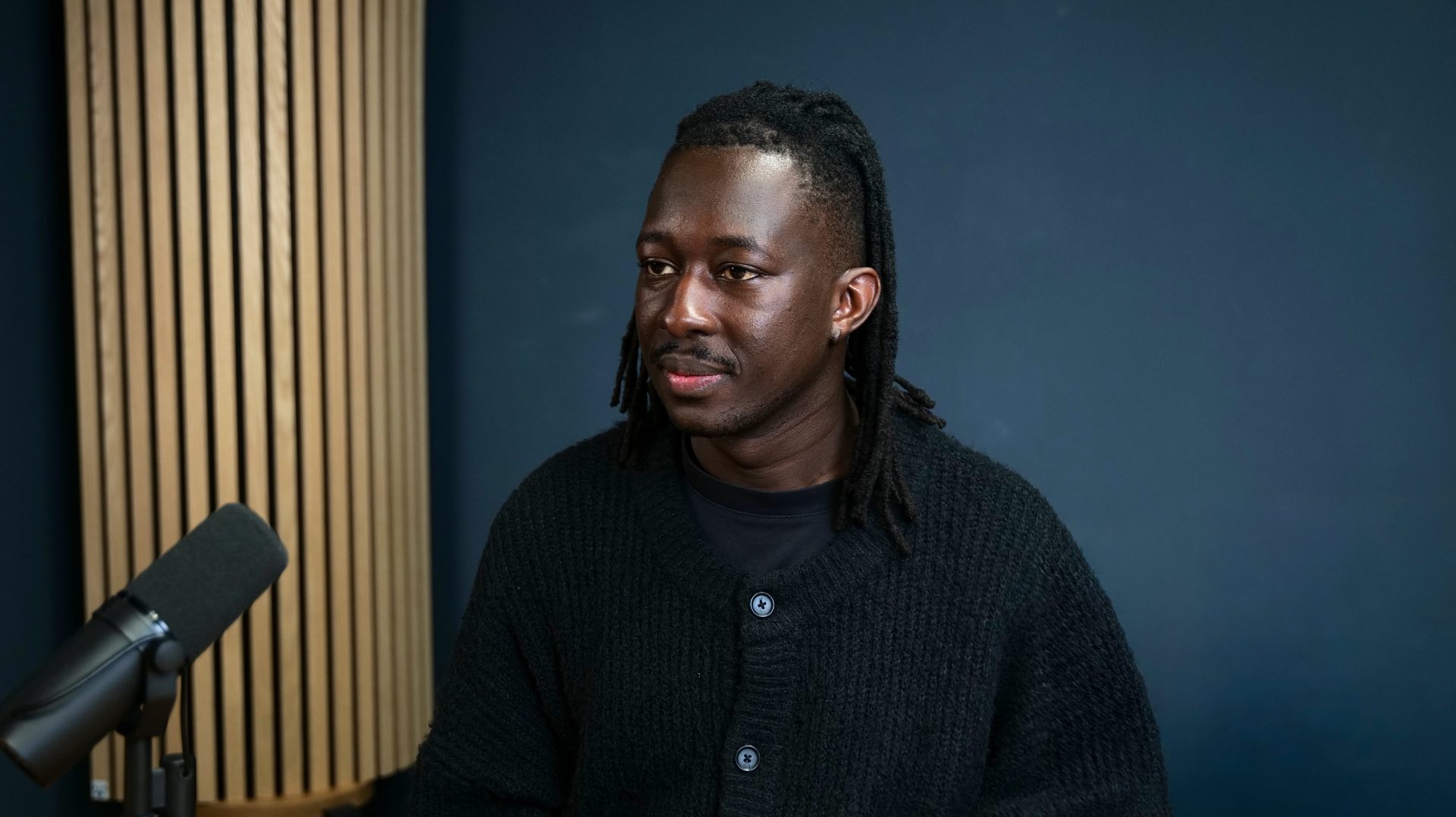
- Mory Sacko left his role as sous-chef under Thierry Marx in 2019 to express his own culinary vision combining French, African, and Japanese influences.
- He entered 'Top Chef' primarily as a pragmatic move to secure financing for his restaurant MoSuke after banks were initially hesitant.
- During lockdowns, he pivoted to a fried chicken takeout street food concept that saved his business and expanded into multiple locations.
- Despite global recognition—including the cover of Time magazine—he stays humble through grueling kitchen hours and a close-knit family.
Mory Sacko is big, and not just in stature—at 1.95 meters tall—or in the originality of his cuisine. He is also big in his daring. The daring to leave the comfort of Thierry Marx's kitchens in 2019 at the Mandarin Oriental, a Parisian palace hotel, to open his own restaurant. The daring, too, to take on the competition of the television show Top Chef. The daring, finally, in the middle of a pandemic, to upend his business model by offering takeout while dreaming of earning a Michelin star. The chef talks to us about leaping into the unknown, adapting to change, media fame, and also learning the tough job of being a business owner.
An interview from the podcast Anatomie d'une décision, available to listen to on Apple Podcasts, Spotify, Deezer, Castbox, Podcast Addict, or by clicking the player at the top of this article.
L'Express: It is spring 2019 and everything is going your way. For three years, you have been Thierry Marx's sous-chef at the Mandarin Oriental, one of the grandest Parisian luxury hotels. An enviable position. What was no longer satisfying to you?
Mory Sacko: I wouldn't say that something was no longer satisfying me, but I wanted a change. As you say, I was very happy in my job. It is an absolutely fantastic profession, and I wasn't bored. From a creative standpoint, I had been working with Thierry Marx for over three years and I was beginning to know him perfectly, knowing exactly what he wanted to taste, to discover. In creating dishes, in the trials I was preparing, a little voice was whispering to me: "What if you made your own cuisine, what would that look like?"
How did Chef Thierry Marx take the news of your departure and this desire to spread your own wings?
It was quite surprising: he was very encouraging towards me. Not because he wanted me to leave. But he thought it was natural for members of his team to want to become entrepreneurs, to launch their own business, and to express themselves. From the moment I announced my decision to him, he has always been of invaluable help.
One decision leads to another. At the same time, you signed up for Top Chef. Was it to prove to yourself that people could like your cuisine? To reassure yourself? To gain notoriety?
Honestly, none of the three reasons you suggest! I just needed money. My registration was done on a very pragmatic basis: I wanted to open my restaurant. I had the concept, I believed I had the skills, but I was missing a major piece: financing. I had some savings, I turned to my family and friends, but it wasn't enough.
Now, bankers back then were looking at me rather strangely. They didn't really understand what I wanted to do—a cuisine that speaks of Africa, France, and Japan. They were lost. I saw the opportunity to do Top Chef as a way to make money. Luckily, I was selected. As soon as I told the bankers I had been chosen, like magic, they were ready to finance me. And then, it's true, I got caught up in the game. It was an incredible experience to be able, for the first time, to cook as Mory Sacko.
You signed the sales agreement for your first restaurant in Paris's 14th arrondissement in December 2019, and you received the keys just weeks before the first lockdown began. Did you feel like the sky was falling on your head?
Totally. The start of my journey was besieged by Covid. It was everywhere. I told myself that instead of suffering through this catastrophe, I had to turn it into a strength, an opportunity. Since the launch was delayed, I took the opportunity to deepen my thinking around MoSuke, my gastronomic restaurant, and to work even more on the menu and the project. At the same time, the Top Chef show, recorded months earlier, aired during lockdown. Those were the highest ratings in the entire history of the show, because people had nothing else to do but watch Top Chef and Koh Lanta! The result was that when lockdown ended, we were hit by a tidal wave... for which I wasn't prepared.
Then came the second lockdown, and once again, you had to pivot. You decided to do takeout. Didn't you think at that moment that you were taking a risk with your image?
During the second lockdown, we had to think fast and, above all, adapt. Because at that moment, it wasn't safeguarding my image that concerned me, but safeguarding my business altogether. As we didn't have a financial track record yet, I wasn't eligible for the state-guaranteed loan. So I came up with a new concept: making something good, something I mastered, and something that could be consumed at home or at the office.
To protect my brand—my gastronomic restaurant—I created a new banner and launched a street food offering so there would be no confusion: fried chicken for takeout throughout the Covid period. We were extremely lucky because this offering was a hit. And we found ourselves working more than with the gastronomic restaurant. I had initially put my employees on furlough, but I called everyone back. The moral of the story? Out of this Covid catastrophe, I created three restaurants and a culinary concept completely separate from MoSuke. Both ventures live alongside each other very well.
I would like to return to a specific date: September 13, 2023. On that day, you were on the cover of the American magazine Time and entered the ranking of the 100 most influential rising stars in the world. How do you keep your feet on the ground after that?
By going back into the kitchen! By working until 11:30 p.m., then going home to sleep, and returning the next morning at 8 a.m. to that same kitchen. I assure you that keeps you well-grounded. Plus, I have a close family circle that makes it literally impossible to lose your mind.
So no ego trips?
Oh no, any ego trip was deflated very quickly because back home, everyone took care of that! My family is very close-knit. When I go back to my parents' house, there is no star, there is no Time Magazine. I set the table like everyone else, and when we are done, we clean up. There's no debating that.
In this adventure, wasn't the hardest part becoming a business owner? What surprised you?
A business leader is someone who manages problems. You spend your day dealing with problems. Sure, there are opportunities, but there are far more problems than opportunities. When I opened my first restaurant, I somewhat naively forgot that I would also be a business owner, not just a chef. And people management is sometimes very complicated. You have to manage occasional slumps in certain employees, their moods, their personal problems. Our profession is very demanding, especially in a gastronomic restaurant, and I ask my team to be at full throttle all the time. Being a business owner also means accepting criticism even when you feel you've given your absolute best. You have to accept it.
The traditional question we ask at the end of each interview: if we were to rewind the tape on all these years, what would you do differently?
Not much, honestly. I loved every moment, the good as well as the not-so-good. I wouldn't change a thing. We had a lot of fun!
Source: L’Express
Comments (0)
You must log in to comment on articles.
Log in Sign upBe the first to comment on this article.