

Historic ICJ Ruling Convicts Myanmar of Genocide: Does It Set a Precedent for Prosecuting Israel?
In an unprecedented landmark ruling, the International Court of Justice has found Myanmar guilty of genocide against the Rohingya, establishing legal principles that experts say could directly impact the genocide case against Israel regarding the Gaza war.

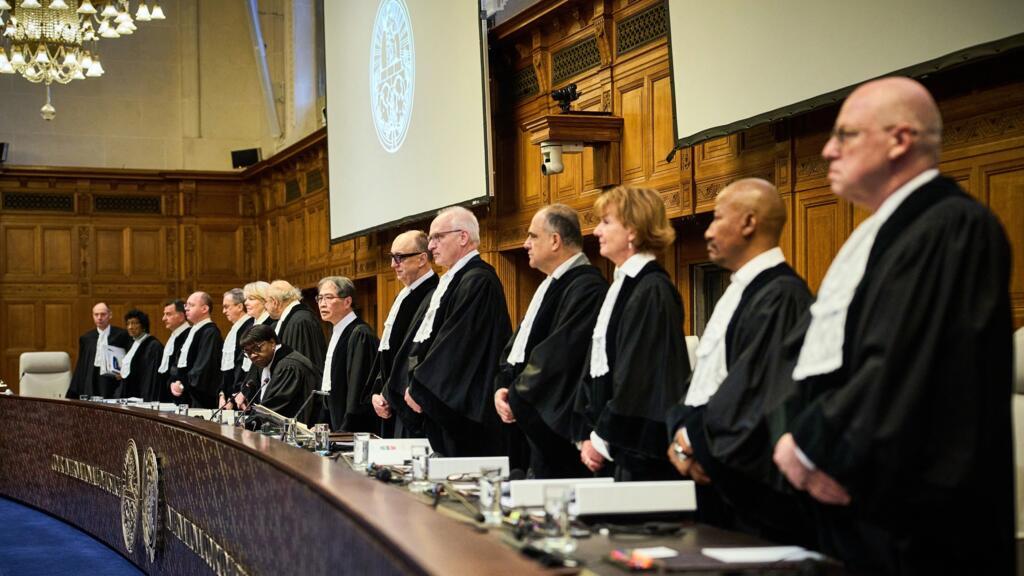
- The International Court of Justice convicts the state of Myanmar for the first time in its history of committing genocide against the Rohingya.
- The ruling establishes that genocidal intent remains valid and provable even in the presence of military or security pretexts such as self-defense.
- Legal experts and human rights defenders view the decision as a judicial precedent that strengthens the case prosecuting Israel for its crimes against civilians in the Gaza Strip.
In a historic judicial ruling, unprecedented since its founding 80 years ago, the International Court of Justice has concluded that the State of Myanmar officially committed the "crime of crimes" by perpetrating genocide against the Muslim Rohingya minority in northern Rakhine State, thereby violating its obligations under the 1948 United Nations Convention on the Prevention and Punishment of the Crime of Genocide.
Establishing Genocidal Intent and Crimes of Displacement and Killing
The decision, adopted by a majority of nine votes to six and read by Judge Yuji Iwasawa, relied on conclusive evidence proving the involvement of Burmese security forces in the killing of thousands of Rohingya civilians, the widespread and systematic practice of sexual violence, brutal atrocities against children, and the targeting of fleeing individuals. The Court affirmed the accuracy of independent UN reports documenting the killing of at least 10,000 people during the 2017 crackdown—equivalent to 1.2% of the 815,000 Rohingya who inhabited the state before the remainder were forced to flee to Bangladesh.
The judicial body in The Hague emphasized that the essential criterion for genocide is not tied solely to the number of victims, but to proving criminal intent to destroy, in whole or in part, a protected group. International law specialist Johann Soufi explained that the Court established an important principle: genocidal intent is not negated by the presence of concurrent objectives, whether declared goals such as combating armed factions or unlawful ones such as forced displacement; such pretexts can coexist with the intent to destroy the group in whole or in part.
Anticipated Judicial Repercussions for the Gaza War
This ruling carries profound significance extending beyond the Burmese case, especially amid anticipation surrounding the trajectory of the lawsuit brought by South Africa against Israel before the same court on charges of genocide in Gaza. Issam Younis, director of the Al Mezan Center for Human Rights, noted that the decision restores hope in the independence of international justice and in preventing Palestine from becoming a graveyard for international law by holding accountable those implicated in documented crimes broadcast live on air.
For her part, Raphaëlle Maison, professor of public international law at Paris-Saclay University, affirmed that genocidal intent can be inferred from actions on the ground as well as explicit, repeated statements by officials, underscoring the obligation of all states not to be complicit in ongoing crimes. In a numerical comparison, Soufi pointed out that approximately 2,100 children under the age of five were killed in Myanmar, whereas in Gaza more than 20,000 children have been killed, with the overall death toll exceeding 74,000 people (more than 3.4% of the population), rendering the facts on the ground and UN evidence largely similar in both cases.
A Test for the International Rule of Law and Great Power Pressures
Despite praise from UN High Commissioner for Human Rights Volker Türk and Gambian President Adama Barrow for the ruling secured by The Gambia following proceedings initiated in 2019, and despite activist and executive director of the Women's Peace Network Wai Wai Nu describing the decision as an end to the Burmese state's lies, the Court lacks executive enforcement power to impose its rulings, such as compensation and the safe return of displaced persons.
Concerns are mounting over efforts to undermine international justice, particularly amid US threats voiced by officials such as Marco Rubio against the International Criminal Court, and pressures exerted by US Ambassador Michael Waltz prior to the issuance of the Myanmar ruling out of concern that it could serve as a precedent condemning Washington's allies. This places the credibility of international judicial institutions on the line before the world's peoples and communities following justice and human rights issues.
Source: RFI



Comments (0)
You must log in to comment on articles.
Log in Sign upBe the first to comment on this article.