

EU Rejects Trump's Proposal for Security Deal with Russia, Insisting: Continent's Security Will Not Be Decided Without Us
European leaders have firmly rejected U.S. President Donald Trump's push for a broad security deal with Russia covering 'all of Europe,' warning that the continent's security architecture cannot be redrawn without its direct participation.

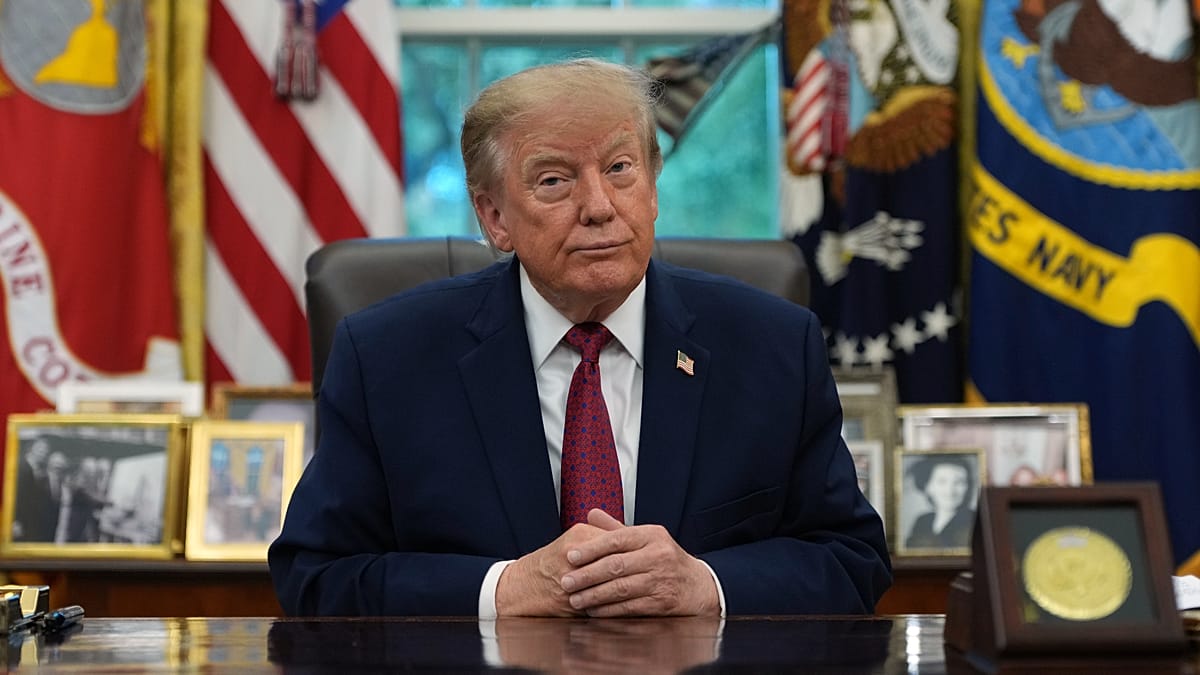
- Firm European rejection of any bilateral deal between Washington and Moscow reshaping the continent's security without its nations' participation.
- Trump's remarks on an agreement covering 'all of Europe' and efforts by his son-in-law Kushner spark concerns among Washington's traditional allies.
- European and Ukrainian insistence on denying Moscow any veto power, ahead of a crucial round of upcoming talks in Abu Dhabi.
A state of anticipation and discontent has gripped political and diplomatic circles across Europe following remarks by U.S. President Donald Trump hinting at an imminent broad security agreement with Russia extending beyond the Ukrainian crisis to encompass 'all of Europe.' These moves met with firm rejection from European Union leaders, who warned against redrawing the continent's security architecture and determining its fate without their direct involvement.
Trump stated on Thursday that the prospective agreement would be 'very important,' adding: 'It will relate to more than just Ukraine, and it may extend to all of Europe. It will be a big, wonderful deal and everyone will be happy with it,' without providing further details. These positions coincided with an announcement by his envoy and son-in-law Jared Kushner that Washington is working to formulate a broader European security framework to create the conditions for lasting peace.
A Firm European Stance: No Negotiations Over Our Heads
This American push sparked immediate reservations across European capitals that closely monitor any development affecting the region's stability and the lives of its people. In this context, EU Foreign Policy Chief Kaja Kallas stated during a press conference in Warsaw that the continent already possesses its existing security architecture, stressing that 'the problem is that Russia continues to violate treaties, NATO poses no threat to Moscow, and Vladimir Putin has no veto over Europe's security.' Kallas emphasized that the Union must be a principal party to any settlement for it to be viable.
For his part, Polish Foreign Minister Radosław Sikorski asserted that any agreement regarding the future of Ukraine and Europe reached without European participation would be 'politically unacceptable and practically impossible.' Ukrainian Foreign Minister Andrii Sybiha also pointed out that Russia cannot be considered a guarantor of security, calling for a focus on protecting the continent rather than discussing the carving up of spheres of influence with the Kremlin.
Abu Dhabi Talks and Comprehensive Security Arrangements
These diplomatic divergences emerge as the parties to the conflict prepare to hold a new round of talks in the UAE capital, Abu Dhabi, next week, under U.S. sponsorship aimed at breaking the diplomatic deadlock. This was preceded by two days of meetings held by U.S. representatives in Brussels with officials from NATO, the European Union, and major European powers to discuss security guarantees for Ukraine and the future of the continent's security order.
Kushner, who joined the Brussels meetings via video conference, sought to reassure European allies through a post on the platform 'X,' asserting that Washington aims to address the security concerns of all parties and will not sideline its partners, but will consult with them in parallel with the Abu Dhabi talks, with the potential to shift negotiations onto a multilateral track if tangible progress is achieved.
Challenges of Protecting European Stability
In turn, European Commission spokesperson Paula Pinho confirmed that the path to peace still requires substantial work, emphasizing that the European Union determines its own security priorities, while NATO reaffirmed its commitment to a 'just and lasting' peace.
European nations fear a return to Russia's past demands, specifically those presented prior to the February 2022 war regarding a review of the deployment of NATO forces in nations that joined the alliance after 1997. European capitals maintain that any peaceful settlement must not reward the use of force, nor can it come at the expense of national sovereignty or the security and internal stability of European societies.
Source: Euronews (فرنسي)

Comments (0)
You must log in to comment on articles.
Log in Sign upBe the first to comment on this article.