

EU Budget in an Impasse: Sharp Disputes Between Paris and Berlin and a Race Against the French Presidential Election
European Union leaders failed at their extraordinary summit in Brussels to resolve deep divisions over the multi-trillion-euro 2028–2034 budget, amid escalating tensions between Paris and Berlin and the looming shadow of the 2027 French presidential race.

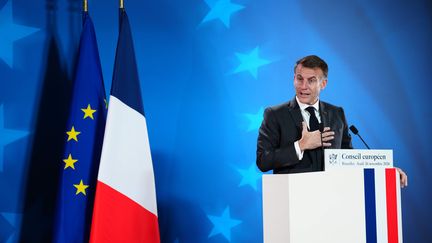
- Brussels summit negotiations over the €2 trillion EU budget stall following cuts exceeding €200 billion.
- France issues an official warning to veto the budget unless €66.25 billion allocated to its agricultural sector is fully guaranteed.
- A fierce political clash erupts between Emmanuel Macron and Marine Le Pen over efforts to finalize the budget ahead of France's 2027 presidential election.
Heated financial debates and clashes were not confined to the French National Assembly, but spilled over into Brussels, where the heads of state and government of the 27 European Union member states failed, during their extraordinary summit on Thursday, November 26, to bridge the divide and overcome deep disagreements surrounding the draft EU budget for the 2028–2034 period.
The EU budget represents a thorny file worth trillions of euros, and the summit aimed to break the current deadlock. Despite a call by European Council President António Costa to show openness and a spirit of compromise to reach an agreement before the end of this year, the meeting ended without tangible results, with hopes pinned on resuming the next round on December 17.
A Race Against Time and the Shadow of the French Elections
These intensive efforts to secure a swift compromise are driven by a desire to avoid dragging negotiations into 2027—a year that will see decisive elections across several member states, notably Poland and France. European leaders fear that the ballot boxes could yield results that further complicate the course of talks, particularly given that France's right-wing National Rally party has declared its intention to reduce Paris's contribution to the common European budget.
The French presidential race cast a heavy shadow over the conclusion of the summit. Right-wing candidate Marine Le Pen launched an attack against President Emmanuel Macron, accusing him of engaging in "despicable political maneuvers" and "confiscating the democratic will of the French people" by attempting to close the budget file before the 2027 election. Macron countered by asserting that Le Pen was acting with arrogance, behaving as though she were already responsible for France's destiny before being elected. He explained that if no agreement is reached by December 31, talks will be deferred to the second half of that year—meaning after the presidential election—which he characterized as an unfavorable option for Europe.
Two Competing Camps: Spending vs. Austerity and Migration
The budget was initially projected at around €2,000 billion over seven years, but it underwent repeated reductions, with the latest draft featuring cuts of more than €200 billion. Macron described these cuts as a "strategic mistake" that risks causing European investments to fall behind major global powers such as the United States and China.
Negotiation corridors are witnessing a clash between two rival camps. The first, led by France, Italy, Spain, and Poland, calls for an ambitious budget that guarantees funding for agricultural policies as well as social and regional cohesion programs. In contrast, the second camp—known as the "frugal nations" bloc—is led by German Chancellor Friedrich Merz with backing from the Netherlands and Sweden; these countries demand extensive further cuts and advocate shifting funding priorities toward defense, combating illegal migration, and border surveillance.
Agricultural Policy and Linking Aid to Ukraine
The Common Agricultural Policy remains one of the most sensitive issues for France, with Macron insisting on fully preserving current allocations. French Minister of Agriculture Annie Genevard confirmed that France will not approve the budget unless the €66.25 billion earmarked for its agricultural sector is guaranteed—a stance that coincided with demonstrations by hundreds of farmers outside the summit venue in Brussels in defense of their entitlements and financial support.
On the other hand, German Chancellor Friedrich Merz considered the €200 billion reduction an irreducible bare minimum. He simultaneously conditioned approval of the budget on the participation of all member states "without exception" in supporting Ukraine, in a clear signal aimed at countries such as Hungary, the Czech Republic, and Slovakia that oppose providing financial aid to Kyiv, setting the stage for complex and grueling rounds of negotiations in December.
Source: France Info


Comments (0)
You must log in to comment on articles.
Log in Sign upBe the first to comment on this article.