

Complete Paralysis in US Airspace: Nationwide Ground Stop and Disruption of Flights to Europe
The Federal Aviation Administration (FAA) ordered a nationwide ground stop on all departing flights across US airports on Friday due to communication issues impacting air traffic control centers.

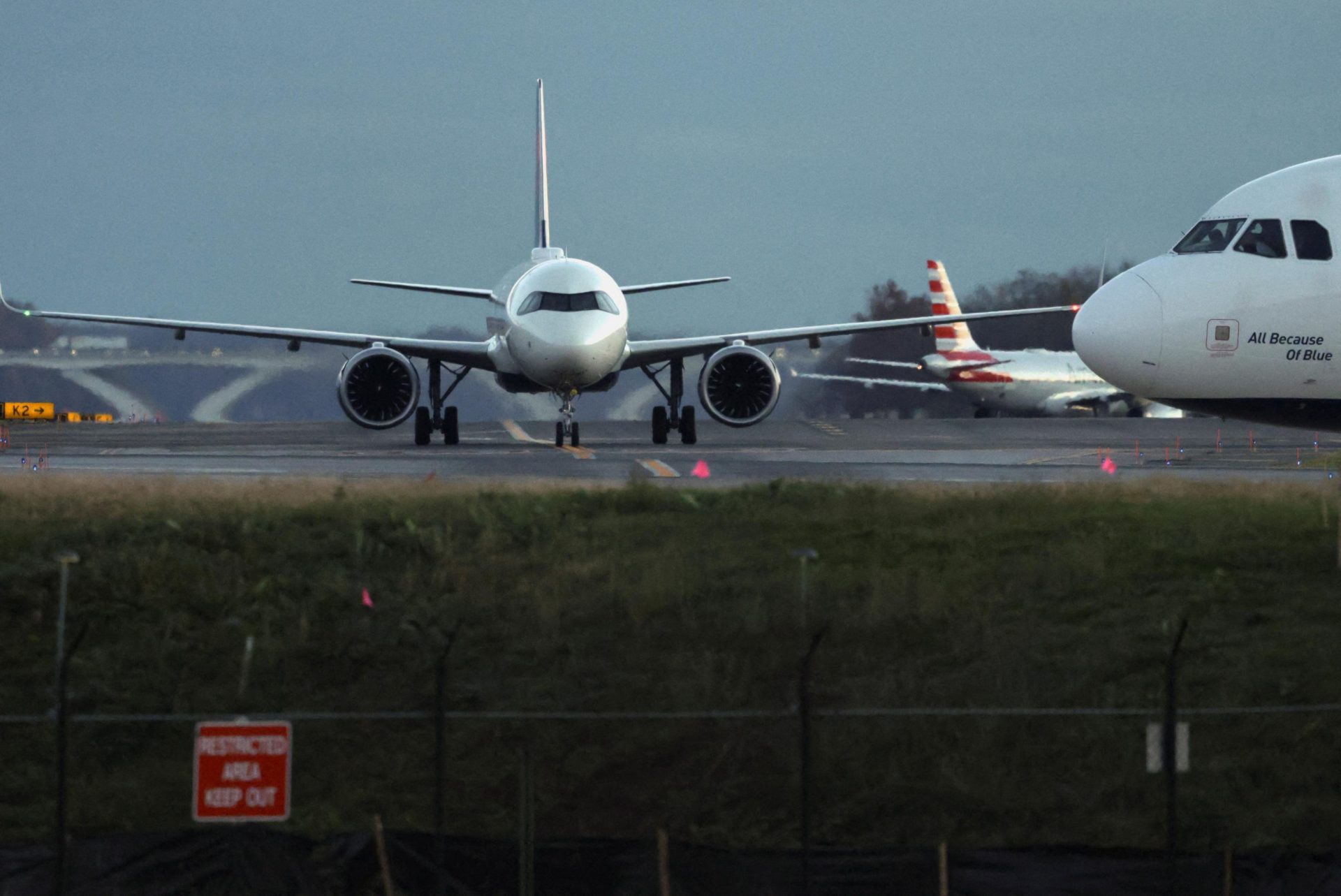
- The Federal Aviation Administration (FAA) halts all departing flights following a technical glitch affecting air traffic control centers.
- Nearly 7,000 flights delayed or canceled, with the cyberattack hypothesis largely ruled out and authorities confirming the safety of airborne aircraft.
- Noticeable disruption in international travel and global airports, including flights bound for Paris and London.
The US Federal Aviation Administration (FAA) ordered a nationwide halt on all departing flights across all United States airports on Friday as a precautionary measure following "communication issues" that affected various air traffic control centers. US Secretary of Transportation Sean Duffy announced that the outage "is impacting all en route air traffic control centers," explaining that technical teams are working around the clock to determine the causes of this sudden telecommunications network outage.
Airport Chaos and Impact on Flights to European Capitals
According to data from flight tracking platform FlightAware, this extraordinary decision led to the delay or cancellation of nearly 7,000 flights out of approximately 30,000 flights scheduled at US airports for that day. While airborne flights continued toward their destinations, major airlines such as United Airlines and American Airlines announced that no new flights would take off as long as the directives remained in effect, causing severe congestion in terminals and prompting some crews to instruct passengers to deplane at airports such as Chicago O'Hare International Airport.
The repercussions of the decision swiftly hit international travel, including transatlantic flights heading to France and Europe, with authorities confirming that inbound flight landings are being handled on a "case-by-case" basis. At San Francisco International Airport, travelers faced prolonged uncertainty, including a passenger named Mary who was preparing to take off at 15:10 local time for Paris, only to find herself stranded without a definite schedule, alongside other travelers en route to family vacations in London and other European destinations.
Cyberattack Ruled Out and Investigations Ongoing
For his part, US Secretary of Homeland Security Markwayne Mullin stated that this suspension was not due to a direct threat or an act of sabotage affecting national security, telling reporters at the White House: "This is not another 9/11, and there is no indication at this time of a malicious attack against us; it is simply a communication outage," confirming that President Donald Trump had been briefed on developments and that passengers were completely safe.
In the same context, the Federal Bureau of Investigation (FBI) initially ruled out the cyberattack track, noting that it is focusing its investigation on whether a specific software update was behind this widespread paralysis. For its part, Microsoft denied any link between the incident and the outage that recently affected its Outlook services. The fallout also extended to neighboring countries; Toronto Pearson Airport in Canada announced a pause on inbound flights from the United States, while other hubs, such as Mexico City's Benito Juárez Airport, urged passengers to verify their flight statuses.
A Rare Precedent and Air Traffic Modernization Challenges
This marks only the third time in American history that a nationwide ground stop has been ordered for all domestic flights. The first occurred during the September 11, 2001 attacks, while the second was recorded on January 11, 2023, following a technical failure in the pilot hazard notification system that lasted approximately 90 minutes.
The incident comes at a critical juncture, coinciding with a White House request to Congress for an additional $30.1 billion in funding to modernize the air traffic control system—some of whose equipment dates back to the 1960s and still relies on legacy platforms. It also comes just days after the federal agency announced the testing of an artificial intelligence system named "SMART" designed to assist in managing air traffic flow and mitigating flight delays.
Source: Le Figaro
Comments (0)
You must log in to comment on articles.
Log in Sign upBe the first to comment on this article.