

Bordeaux's Artificial Lake: The Urban Project That Turned Marshes into a Vibrant District
Covering 160 hectares, Bordeaux Lake owes its existence to extensive engineering works in the 1960s that transformed northern marshes into a major urban district.

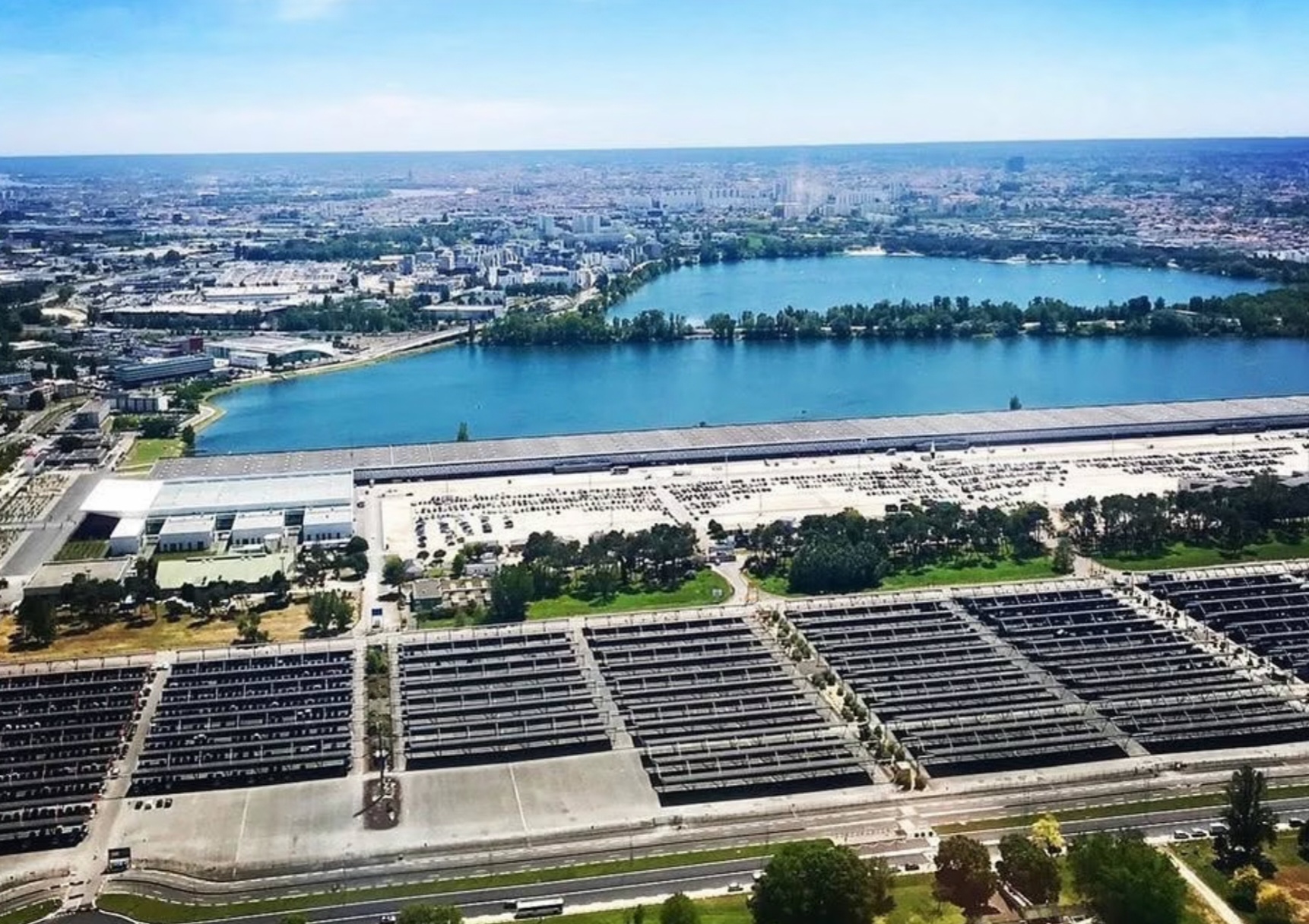
- The 160-hectare artificial Bordeaux Lake was dredged in the early 1960s to drain northern marshes and support urban expansion.
- The project embodied the vision of Mayor Jacques Chaban-Delmas and architect Xavier Arsène-Henry, paving the way for major developments such as 'Les Aubiers' and the 'Ginko' eco-district.
- The opening of an urban beach in July 1990 reinforced the recreational character of the area, which also hosts exhibition centers and modern sports facilities.
Spanning 160 hectares, Bordeaux Lake gives the impression of a natural landscape pre-dating the founding of the city, yet it owes its existence to extensive engineering works. In the early 1960s, dredgers dug through the marshes north of Bordeaux to accommodate urban expansion; the creation of this artificial body of water was aimed at reclaiming and sanitizing the area to become the heart of a new urban district whose shores still recount the story of this major transformation today.
Excavating the Marshes and Shaping the City's Contours
Before the emergence of major buildings and facilities, the area was a wetland situated on the border between northern Bordeaux and the municipality of Bruges. Excavation work surged through 1962 and 1963 as part of a massive project covering 1,200 hectares of marshland, with the volume of earth and excavated materials for the lake reaching approximately 18 million cubic meters, according to historical records from the Bordeaux municipality.
The plan was not designed to build around an already existing lake; rather, urban planning and the creation of the water body were part of a unified scheme. The primary objective of draining and preparing the land was to allow the city to expand into areas that had long remained uninhabited, so that the water collected in the basin would give its name to an entire neighborhood in Bordeaux.
An Urban Vision Combining Water and Architecture
This project reflected the ambition of former mayor Jacques Chaban-Delmas and architect and urban planner Xavier Arsène-Henry to establish a residential district combining nature and urban life, with water occupying the forefront of this design. The project mirrored the major development operations witnessed across France during the 1960s to meet cities' needs for new development spaces, ultimately realizing an old concept originally proposed in 1930 by engineer Cyprien Alfred-Duprat to create a lake at the very same site.
Heritage documents indicate that the lake is not merely an aesthetic feature, but functions as part of a hydraulic system linked to a network of canals and waterways known as 'les jalles'. The new district accommodated functions requiring extensive land, including housing, commercial complexes, the Exhibition Center, and sports facilities, while preserving some wetlands to the north under protected or agricultural designations.
Residential Developments and an Urban Beach for Recreation
The neighborhood was not built all at once; its structures were erected in successive phases, starting from the 'Les Aubiers' complex up to the modern 'Ginko' eco-district, with the water body remaining a common focal point among all surrounding residential projects and public amenities.
In a move to bolster recreational activities, the public swimming beach at Bordeaux Lake was inaugurated on July 1, 1990, later undergoing expansions and renovations that provided a seasonal escape close to residential areas. This history endows Bordeaux Lake with a unique identity setting it apart from the natural lakes along the Gironde coast, standing today as living testimony to an engineering endeavor that reshaped the city's geography and produced one of the most prominent landmarks of northern Bordeaux.
Source: bougerabordeaux

Comments (0)
You must log in to comment on articles.
Log in Sign upBe the first to comment on this article.