

Merz: Failure to Admit Ukraine to NATO in 2008 Was a Grave Mistake; Macron Calls to Reopen the File

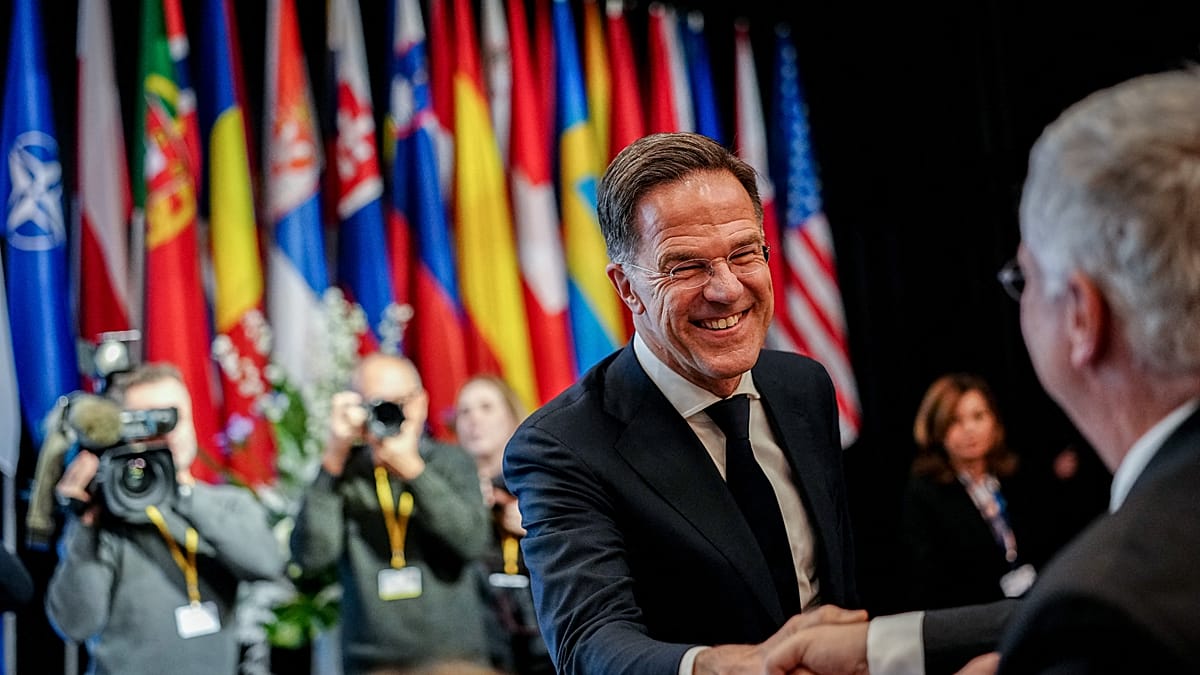
- German Chancellor Friedrich Merz asserts that excluding Ukraine from NATO in 2008 paved the way for the Russian invasion.
- Merz's remarks align with French President Emmanuel Macron's call to revisit the issue of Kyiv's accession.
- NATO Secretary-General Mark Rutte rejects Moscow's demands to return to 1997 borders and reaffirms support for Poland after missiles struck its territory.
German Chancellor Friedrich Merz described the decision not to open a path for Ukraine's accession to the North Atlantic Treaty Organization (NATO) during the 2008 Bucharest summit as a "mistake," despite the proposal put forward at the time by then-U.S. President George W. Bush to support the move.
The 2008 Summit and the Russian War in Ukraine
During a press conference held in Berlin alongside NATO Secretary-General Mark Rutte, Merz stated: "I think we all realize today how regrettable it was not to follow the American proposal during the NATO summit in Bucharest in 2008." The German Chancellor added that Russia's full-scale invasion of Ukraine could have been prevented, emphasizing that "if Ukraine had become a member of NATO, this war would most likely have been avoided."
These remarks coincide with diplomatic discussions being led by the United States in an effort to end the conflict, at a time when the European continent is witnessing renewed debates regarding future security arrangements.
Alignment with the French Stance and Caution from NATO
Merz's statements align with the position recently expressed by French President Emmanuel Macron, who called for reopening discussions on Ukraine's accession to the Western alliance as an option on the negotiating table aimed at settling the crisis.
In contrast, NATO Secretary-General Mark Rutte adopted a more cautious stance regarding accelerating discussions on Kyiv's membership, pointing to the need to first reach tangible results in peace negotiations. Rutte clarified that the established position remains that Ukraine should be part of the alliance in the future, but noted there is currently no consensus among the 32 member states on the matter at this time.
Rejection of Moscow's Demands and Military Reinforcements
In response to reports indicating that Russian President Vladimir Putin has made NATO's return to its 1997 borders and posture a condition for ending the conflict, Rutte categorically rejected acceding to such demands aimed at undoing post-Soviet expansions, stressing that "the 32 member states alone decide who joins NATO and who does not."
Rutte addressed the growing escalation and tensions in Europe resulting from what he described as hybrid attacks, pointing to an incident in which two cruise missiles and a Russian drone fell inside Polish territory. He noted that Russia's massive human losses, which he estimated at up to 50,000 soldiers per month, are driving this aggressive behavior.
Following developments in Poland, alliance ambassadors held a meeting in Brussels, while the Supreme Allied Commander Europe (SACEUR) is evaluating the deployment of additional military reinforcements to strengthen deterrence and defense posture in Poland and across the rest of the alliance's eastern flank.
Source: Euronews (فرنسي)
Comments (0)
You must log in to comment on articles.
Log in Sign upBe the first to comment on this article.