

Spending Caps and Prison Sentences: How France Regulates Presidential Campaign Financing
French presidential campaigns operate under strict financing regulations, with stringent spending caps, bans on corporate donations, and severe legal penalties for violations.

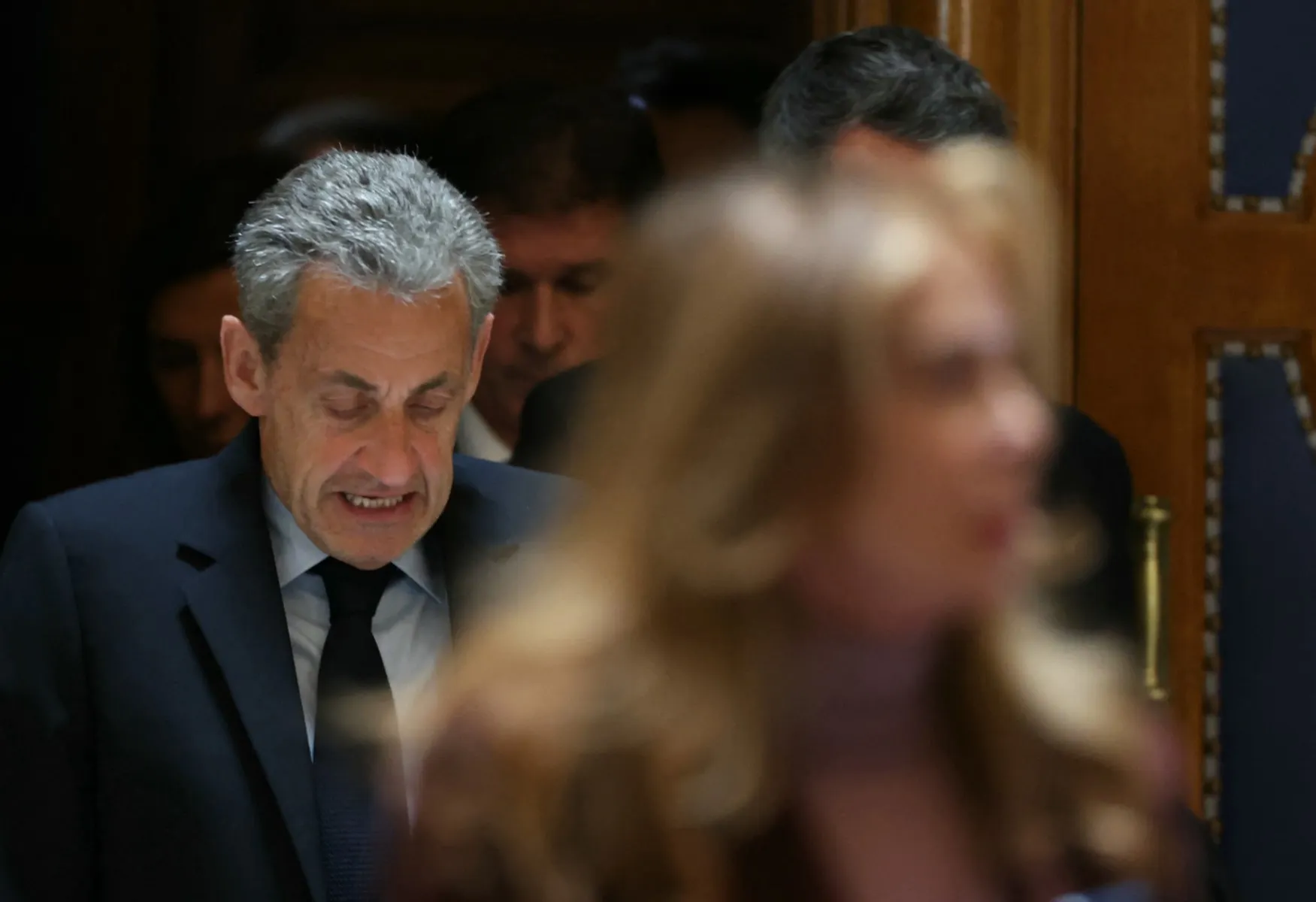
- The total presidential campaign spending limit is capped at €22.51 million, alongside a complete ban on donations from corporations and legal entities.
- Paid commercial advertising in media and on social networks is banned during the six months prior to the vote, while the state provides financial reimbursements to qualifying candidates.
- Campaign accounts are audited by the National Commission on Campaign Accounts and Political Financing (CNCCFP), with severe penalties—including prison terms—for violations, as seen in the Bygmalion affair.
Presidential campaigns in France are governed by a stringent financing framework, where candidates who breach regulations face serious legal consequences that can reach prison terms. French laws impose clear limits on spending and funding sources to ensure transparency and equal opportunity among competitors.
Specific Spending Caps Compared to Other International Systems
French law currently sets a total presidential campaign spending ceiling of €22.51 million. This cap spans a full year prior to the election, meaning the accounting of expenses for the 2027 election began in April 2026. All candidates are permitted to spend up to €16.85 million through the first round scheduled for April 18, 2027, while the two runoff contenders receive an additional spending allowance of €5.66 million during the two-week interval between rounds.
These figures are modest when compared to other systems; candidates Kamala Harris and Donald Trump raised and spent an estimated combined total of more than $5.5 billion during the 2024 U.S. campaign. The French cap is also lower than the limit imposed in Britain, where general election spending is capped at £34 million.
Strict Limits on Donations and Financial Transparency
Beyond the spending ceiling, regulations impose a 100% ban on donations from corporations or legal entities, including lobbying groups and charities. Individual donations are restricted to a maximum of €4,600 per person to prevent wealthy individuals from buying political influence, cash payments are capped at €150, and candidates are required to meticulously document donor details.
Geographically, a law enacted following the 2017 election prohibits borrowing funds from financial institutions located outside the European Economic Area (EEA). Consequently, the loan Marine Le Pen obtained in January 2022 from a Hungarian bank, totaling more than €10 million, was deemed legal, whereas loans from Russian banks previously relied upon by her party were outlawed. Candidates are also mandated to submit detailed declarations of wealth, assets, and professional activities for themselves and their spouses—disclosures that revealed in 2022, for instance, that the most valuable asset held by Trotskyist candidate Philippe Poutou was his Peugeot 308 car.
Public Funding and Permissible Versus Prohibited Expenses
The state provides financial support to certified candidates; each first-round candidate receives €200,000 in public funds. A candidate who clears the 5% vote threshold in the first round can be reimbursed up to €8 million of their campaign expenses, whereas compensation does not exceed €800,423 for those obtaining under 5%. Runoff qualifiers can receive reimbursements of up to €10.7 million.
Eligible expenses for reimbursement include public rallies, campaign literature, staff salaries, campaign headquarters, and digital campaigning (website and app development, video production, and podcasts). Conversely, French law bans paid commercial advertisements across television, radio, print newspapers, billboards, search engines, and social media platforms during the six months preceding the ballot; candidates are instead allotted free public broadcasting time to present their platforms. Additionally, direct payment of election invoices by the candidate or third parties is prohibited, as is the coverage of personal expenses such as clothing, healthcare, parking tickets, fines, and lavish private celebrations.
Auditing Accounts and Judicial Precedents
Campaign funds are managed centrally through an accredited financial agent who opens a dedicated bank account to record all revenue, expenditures, and in-kind contributions, submitting all invoices to the National Commission on Campaign Accounts and Political Financing (CNCCFP)—the body authorized to monitor compliance and refer suspected infractions to the judiciary.
Historical records show that reaching the upper spending limit has frequently correlated with victory, as demonstrated by Emmanuel Macron against Marine Le Pen in 2017 and 2022 after outspending her, as well as by Nicolas Sarkozy in 2007 and Jacques Chirac in 1995 and 2002. The most prominent exception remains the 2012 election, when Sarkozy was defeated by François Hollande despite being the top spender; Sarkozy was subsequently stripped of all state reimbursement after breaching the spending limit and was ordered to cover approximately €23 million.
Those infractions led to a judicial conviction in 2021 known as the "Bygmalion affair," in which the court sentenced Sarkozy to one year in prison (later reduced to six months with an electronic monitoring bracelet, before being dismissed by a judge in May 2026 due to his advanced age), after it was revealed that a public relations agency used forged invoices to conceal spending that doubled the permitted ceiling during his campaign rallies.
Source: The Local



Comments (0)
You must log in to comment on articles.
Log in Sign upBe the first to comment on this article.