

Water Hardness Map in France: Where Are the Highest Limescale Levels in Tap Water Found?
Official data reveals significant disparities in tap water hardness across France, driven by local geology, with the Nord department recording the highest limescale levels.

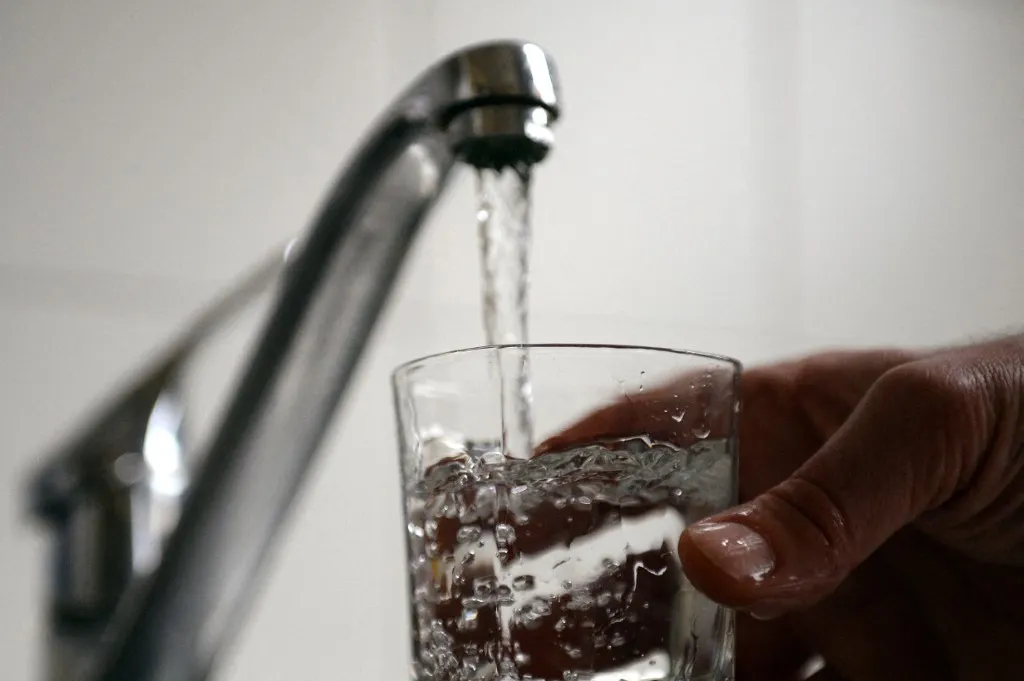
- The Nord department leads French departments in tap water hardness and limescale buildup, while Lozère records the softest water.
- The variation is due to local geological formations; limestone rocks increase calcium and magnesium levels without posing any health risks.
- Guidance recommends using water softeners (adoucisseurs d'eau) or white vinegar and citric acid to protect plumbing and household appliances.
Many residents in France notice a white, chalky residue accumulating around taps, showerheads, and kettles, a phenomenon known locally as the presence of "calcaire" (limescale) in tap water. These deposits are associated with what is known as "hard water"—water rich in dissolved minerals that also makes it harder for soap to lather during daily use.
Water hardness in France is measured in French degrees (°f) via the hydrotimetric titer (TH), which assesses the concentration of calcium and magnesium in samples and converts it into calcium carbonate equivalent, where one French degree equals 10 milligrams of calcium carbonate per liter. The higher this figure, the higher the mineral content and water hardness.
Where Is the Hardest and Most Limescale-Rich Water Concentrated?
According to an analysis of official water quality monitoring data from the Regional Health Agencies (ARS), the Nord department in the Hauts-de-France region tops the list of French departments in terms of tap water hardness, averaging 36.4 French degrees. The region encompasses five departments ranked among the top six nationwide for water hardness.
Parts of Normandy, particularly the Eure, Calvados, and Seine-Maritime departments, also record relatively high levels. This high hardness extends eastward into departments within the Grand Est region, such as Marne, Ardennes, and Haute-Marne, as well as Charente-Maritime and Vienne in Nouvelle-Aquitaine.
Water Hardness Levels in Paris and Its Suburbs
In the capital, Paris, average water hardness stands at 26.3 French degrees, placing it in the moderately hard water category. However, the suburbs surrounding the capital show noticeable variation: Seine-Saint-Denis records an average of 27.7 degrees, Seine-et-Marne roughly 27.5 degrees, and Val-d'Oise about 26.7 degrees, compared to 24.1 degrees in Hauts-de-Seine and just 19.5 degrees in Yvelines. This means residents living only a few kilometers apart can experience vastly different levels of limescale in their homes.
Areas with the Softest Water and the Geological Cause
On the other hand, parts of central and southwestern France enjoy softer water with significantly lower hardness. The Lozère department in the Occitanie region records the lowest rate in mainland France, averaging just 1.6 French degrees. It is followed by departments such as Cantal at 3.2 degrees, Haute-Loire at 6.3 degrees, and Corrèze at 7.6 degrees.
This disparity is primarily attributed to regional geology. Rainwater filtering through limestone-rich rocks absorbs larger quantities of calcium and magnesium, as is the case in northern France, whereas water in granitic regions, such as the Massif Central highlands, contains minimal amounts of dissolved minerals.
Is Hard Water Safe to Drink? And How Can It Be Managed?
Health authorities confirm that hard, limescale-rich water poses no danger to human health; calcium and magnesium are natural, healthy minerals, and the distinct taste does not hinder safe consumption. The main drawbacks remain domestic and financial, such as accelerating wear and tear on water heaters, washing machines, and kettles, clogging pipes, leaving white streaks on shower screens, and potentially causing mild skin and hair dryness with repeated bathing.
To mitigate the effects of limescale at home, water softeners (adoucisseur d'eau) serve as an effective solution, extracting calcium and magnesium at the home's water inlet to safeguard plumbing installations. It is also recommended to install anti-limescale filters on showerheads and routinely use white vinegar or citric acid to clean household appliances and descale them, bearing in mind that standard pitcher filters or boiling water do not entirely remove water hardness.
Source: The Local



Comments (0)
You must log in to comment on articles.
Log in Sign upBe the first to comment on this article.