

Gironde and Landes Fires: Nouvelle-Aquitaine Region Launches Strategic Measures for Forest Rehabilitation
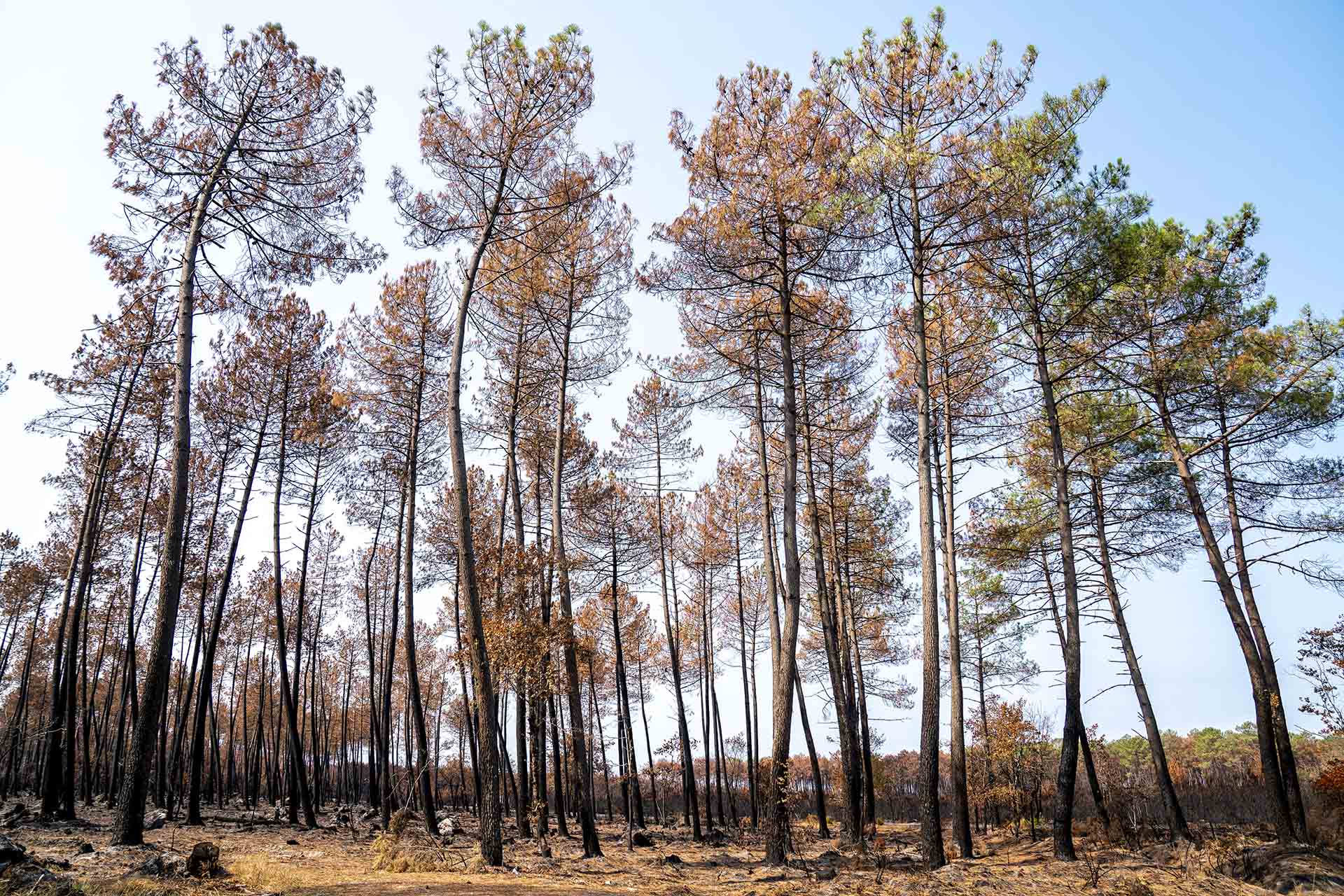
Nouvelle-Aquitaine approves strategic measures focused on sustainability and ecological restoration to rehabilitate forests and natural areas devastated by exceptional wildfires in Gironde and Landes.

- Mobilizing regional, European, and private funding to support forests, restore Natura 2000 sites, and conserve water resources.
- Developing a regional 'digital twin' by 2027 to simulate climate risks and assist in decision-making.
- Supporting local authorities and territorial development through an expanded governance framework officially launching in 2027.
As part of the regional action plan to address the aftermath of the exceptional wildfires in Gironde and Landes, the Regional Council of Nouvelle-Aquitaine has approved a set of strategic measures focused on sustainability and restoring the ecological balance of affected forests and natural areas, while proactively preparing for the future.
Innovative Financing and Field Experiments for Resilient Forests
The regional plan outlines mechanisms to secure the necessary financial resources for rebuilding forest massifs. This includes activating the Regional Nature Fund (Fonds NAture) and continuing to attract private financing through the Heritage Foundation (Fondation du Patrimoine) and the Carbon Cooperative (Coopérative Carbone). Furthermore, in negotiations for European funding for the 2028–2034 period (PPNR), the region aims to make the adaptation of natural areas a strategic priority, alongside developing Payment for Environmental Services (PSE) tools.
On the ground, funding from the European Agricultural Fund for Rural Development (FEADER) will be mobilized to carry out restoration operations and monitor affected Natura 2000 sites. In the Médoc area, an experimental action zone named 'Forest of Tomorrow' is being launched in cooperation with regional natural parks and researchers to test adaptation solutions on a large scale, in parallel with implementing an intensive plan to conserve water resources in forest environments amid recurrent droughts and extreme heatwaves.
Digital Technology Serving Environmental Decision-Making
As part of its future-oriented plans, the region is preparing to launch a research call for projects in 2027 to construct a 'digital twin' of the territory (Jumeau numérique). This computational model will integrate various environmental hazards, such as fires, floods, storms, and droughts, and monitor their direct repercussions on populations, economic activities, and natural environments, serving as a scientific foundation to assist decision-makers in determining appropriate territorial choices within future regional spatial planning schemes (Sraddet).
Supporting Local Authorities and Expanded Governance by 2027
To ensure these strategies are translated into reality on the ground, the region is providing local authorities and intermunicipal bodies with territorial transition workshops to strengthen their resilience against climate risks, in addition to capitalizing on the Néo Terra Adapt initiative to formulate local adaptation strategies, with Development and Transition Contracts (CDT) spanning 2026 to 2028 serving as a monitoring and evaluation framework.
Additionally, in cooperation with the French State, the region will organize a multidisciplinary governance structure bringing together local authorities, urban planning agencies, scientific laboratories, and stakeholders from the forest and wood industry. The work of this participatory governance body is expected to be officially launched in 2027 to establish a unified vision for managing natural spaces and confronting climate change.
Source: Nouvelle Aquitaine


Comments (0)
You must log in to comment on articles.
Log in Sign upBe the first to comment on this article.