

French Researcher: Artificial Intelligence Will Revolutionize Warfare on a Scale Comparable to the Emergence of Language
In his new book, French anthropologist and former air force officer Jean-Claude Fafin-Lévêque argues that artificial intelligence will transform warfare just as profoundly as the advent of human language did millions of years ago.

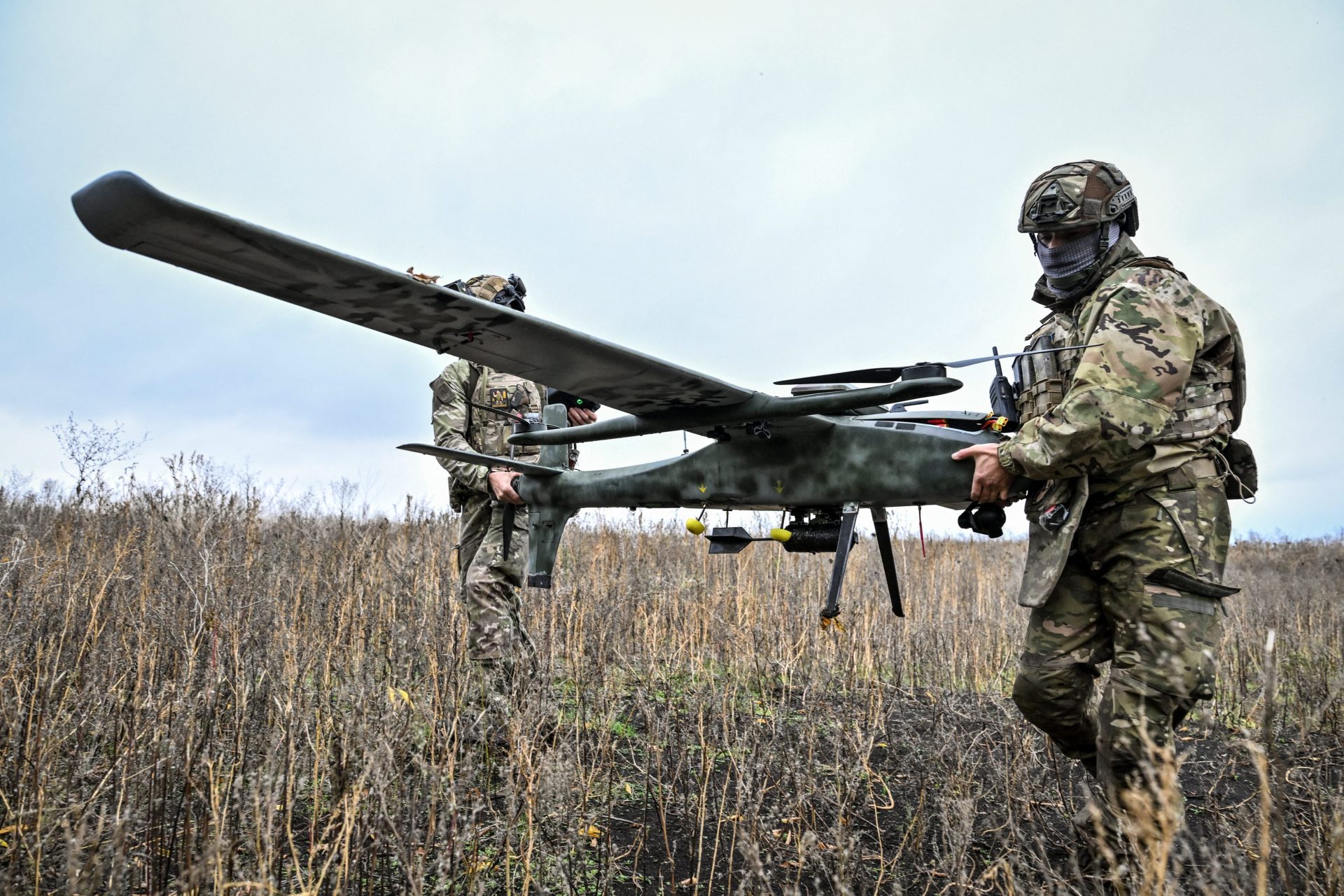
- A new book published in France by researcher Jean-Claude Fafin-Lévêque deconstructs the historical origins of wars and conflicts.
- The book's thesis asserts that war is not a product of the Neolithic era, but the outcome of a 7-million-year accumulation shaped by family, tools, and language.
- Artificial intelligence is classified as the most critical transformation affecting the future of conflicts and wars since the emergence of human spoken language.
Amid an intellectual and cultural debate taking place in France alongside rapid technological transformations, a new book titled "Et l’Homme créa la guerre" (And Thus Man Created War) has recently been published by Éditions Hermann, authored by anthropologist and former French Air and Space Force officer Jean-Claude Fafin-Lévêque.
Deconstructing Classical Theories on the Origins of War
Fafin-Lévêque, an associate researcher at the National Museum of Natural History in Paris, offers an alternative perspective to classical theories; he rejects Jean-Jacques Rousseau's concept of the "noble savage" as well as Thomas Hobbes's premise of man being naturally evil. Rather than viewing war as merely a biological instinct or a late cultural invention linked to the Neolithic agricultural revolution, the researcher explains that collective violence is a gradual construction unique to the human lineage, dating back roughly seven million years to the era of the common ancestor humans shared with chimpanzees and bonobos.
Three Pillars in the Making of Conflict
According to the author's statements, war developed from a long historical accumulation grounded in three successive and overlapping elements: first, social evolution represented by the emergence of the family institution and kinship systems; second, the invention of the tool, which quickly turned into a weapon that made killing easier compared to direct physical confrontation; and third, language, which constituted an exceptional turning point that enabled the organization of conflicts, the formulation of tactics, and greater efficiency in armed confrontations between groups.
Artificial Intelligence and the Language of Contemporary Warfare
In light of the ongoing digital revolution, the French researcher argues that the integration of artificial intelligence into planning and armaments may be the most influential and decisive innovation in the future of wars and conflicts, matching in its gravity and impact the transformative role human language first played in managing and organizing collective violence among societies.
Source: L’Express
Comments (0)
You must log in to comment on articles.
Log in Sign upBe the first to comment on this article.