

World's Largest Urban Museum Opens in London with Over €500M Cost and Free Public Admission
Following a decade-long modernization project exceeding €500 million, the London Museum is reopening this weekend at its new Smithfield location as the world's largest urban museum with free admission.

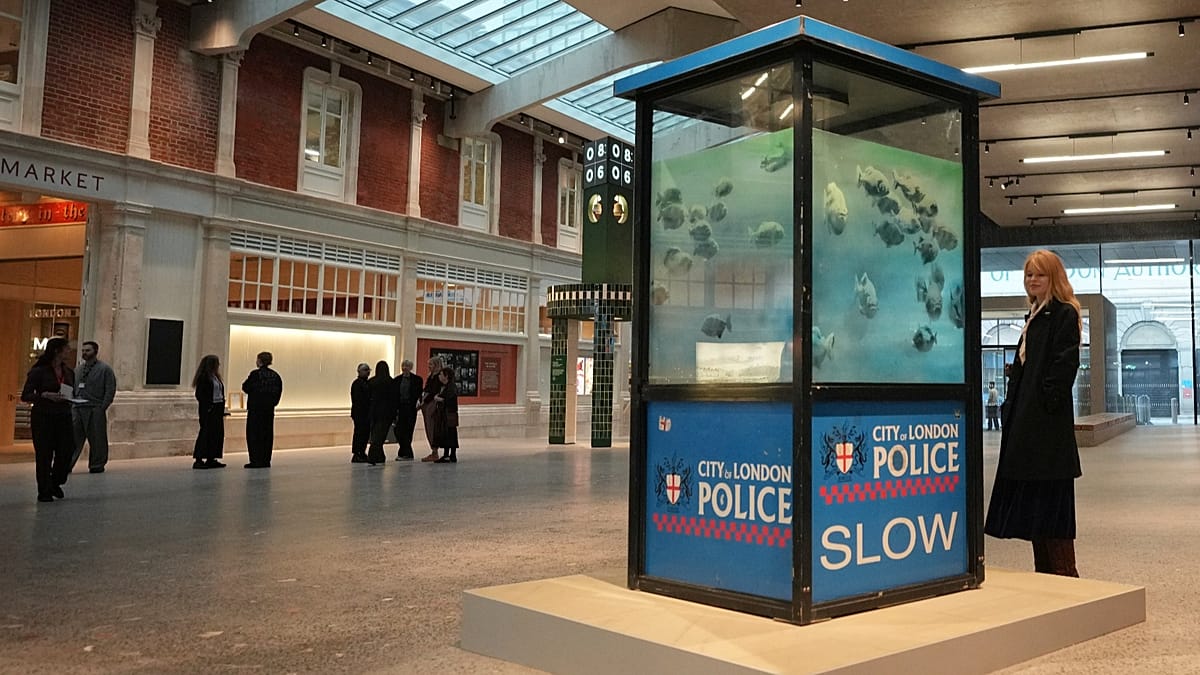
- The London Museum reopens on November 28 at the Smithfield market site following a 10-year redevelopment costing €532 million.
- Showcasing over 7 million historical and cultural artifacts recounting the capital's history, permanent galleries will be open to all visitors free of charge.
- Adopting a modern interactive vision featuring immersive projection technology and evening cultural events, transforming it into an open social space.
Following a modernization and restoration journey spanning nearly a full decade and costing more than €500 million, the London Museum reopens its doors this weekend at its new home inside the old Victorian General Market in Smithfield, presenting itself as the world's largest urban museum.
From a Historic Market to a Giant Cultural Platform
During the extensive and meticulous renovation of the old, dilapidated meat market in Smithfield, the director of the London Museum, Sharon Ament, explained that her goal was to create a building that represents the capital across all its historical and social dimensions, with its varied complexities and diverse richness. The new building, fitted out at a cost of €532 million, replaces the museum's former premises, which suffered from poor accessibility and closed in 2002.
The new site is distinguished by easy accessibility via public transport, in addition to a design that allows seamless passage for local residents and workers without physical barriers impeding entry, so much so that visitors can even watch train traffic while strolling through this historic landmark.
A Living Memory and Millions of Historical Artifacts
The museum houses a massive collection comprising around seven million items gathered from various London neighborhoods and boroughs, narrating the journey of the city and its inhabitants across thousands of years. The exhibits range from rare Roman-era pieces and sporting memorabilia—such as Olympic champion Tom Daley's swimming trunks—to relics of everyday life, including a salt beef bagel and a fatberg extracted from the sewer system as a symbol of urban expansion challenges.
The restoration of the historic market made it possible to preserve its unique architectural features, including the grand dome, ornate ironwork, and vaulted brick basements, while converting the market trading halls and expansive subterranean spaces into vibrant exhibition galleries.
A Social Space and Free Admission
The museum's management seeks to move beyond traditional formats by deploying immersive lighting projections and 3D sound to revive Roman London in its lower corridors, alongside organizing community events, as well as cultural and musical evening programs on weekends, establishing it as a lively meeting space that meets visitors' expectations and keeps pace with societal shifts.
The permanent galleries will open their doors free of charge to the public starting November 28, offering everyone the opportunity to discover the city's history and culture without cost, with a second phase of expansion and learning spaces scheduled for completion by 2028.
Source: Euronews (فرنسي)

Comments (0)
You must log in to comment on articles.
Log in Sign upBe the first to comment on this article.