

France 2027 Presidential Poll: Le Pen and Mélenchon Advance Amid Government Anticipation of Minimum Wage Battle
A recent poll ahead of the 2027 French presidential election shows Marine Le Pen and Jean-Luc Mélenchon leading, as social tensions rise and the government prepares for a showdown over minimum wage increases.

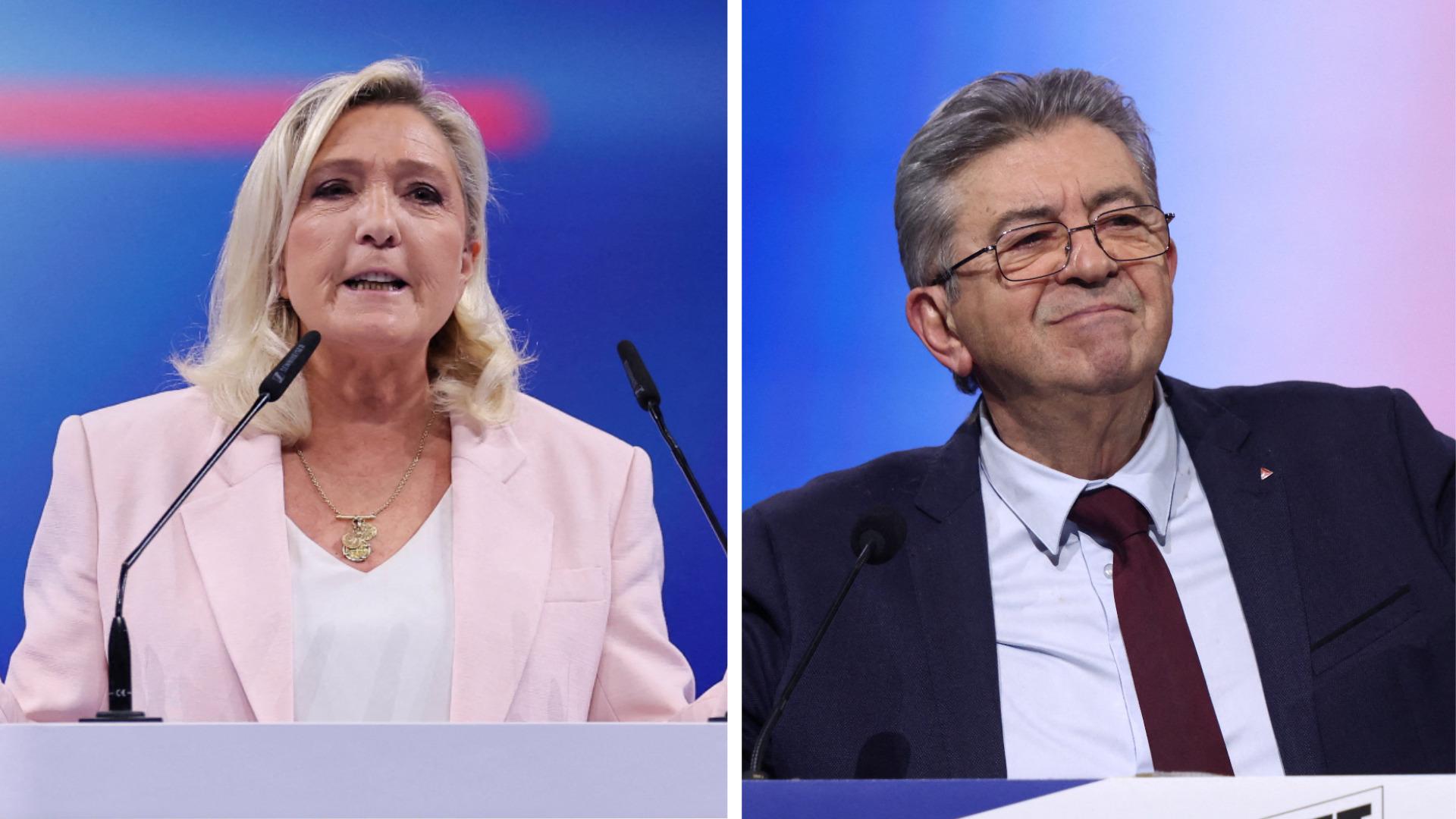
- Marine Le Pen (34–36%) and Jean-Luc Mélenchon (18–19%) lead 2027 presidential polls, while Édouard Philippe's chances decline.
- The French government prepares for a social conference amid union demands to raise the net minimum wage (SMIC) by up to €150.
- Growing friction within the left and warnings over a far-right victory at the Élysée, alongside fierce debates on foreign policy and Gaza.
The French political scene is witnessing acute polarization ahead of the presidential election scheduled for 2027, coinciding with mounting living pressures and social discontent affecting the daily lives of the working class and migrant workers in the country, chief among them the issues of purchasing power and wages.
Acute Polarization: Le Pen and Mélenchon Rise as the Center Declines
An opinion poll conducted by Harris Interactive for M6/RTL showed far-right candidate Marine Le Pen and La France Insoumise leader Jean-Luc Mélenchon maintaining their lead, gaining one to two percentage points compared to findings from late October. According to all tested scenarios, a second-round runoff would pit Le Pen—who garnered between 34% and 36% of the vote—against Mélenchon, who stood between 18% and 19%.
Conversely, former Prime Minister Édouard Philippe continues his downward trajectory, polling between 11% and 14%, trailing significantly behind Mélenchon. Meanwhile, the Mayor of Cannes, David Lisnard, has begun closing the gap, recording 9% and tying with Gabriel Attal (10%) in some scenarios, while Bruno Retailleau's prospects fluctuate between 5% and 8%. For his part, social-democratic candidate Raphaël Glucksmann is experiencing a decline in momentum, with support between 11% and 13%.
In light of these indicators, lawmaker François Ruffin issued a warning regarding Le Pen's rise, arguing that Mélenchon is incapable of defeating her in a second round, and noting the presence of an "inevitable train leading Marine Le Pen toward the Élysée, with the final station drawing closer and closer."
The Battle Over the Minimum Wage (SMIC)
Amid widespread popular anger in the streets, the French government is seeking to defuse tensions through an upcoming "social conference" at Matignon chaired by Sébastien Lecornu, with the participation of trade unions and employers' organizations, where the demand to increase the minimum wage (SMIC) tops the agenda.
Labor unions are calling for clear increases: the French Democratic Confederation of Labour (CFDT) is pushing for a net raise of €100, while the General Confederation of Labour (CGT) is demanding a €150 increase. Meanwhile, Labor Minister Jean-Pierre Farandou told the newspaper La Tribune Dimanche that any increase must not harm employment, pointing to the possibility of crossing the threshold of €1,500 net per month—representing a minimum increase of just €22, a move observers believe could spark widespread disappointment due to the tight fiscal margin.
Divisions on the Left and Political Clashes
The political sphere is also witnessing escalating disputes among factions of the left. Raphaël Glucksmann launched an attack on Mélenchon following the latter's rally in Le Bourget, affirming his determination to end what he described as Mélenchon's "cultural, ideological, and political hegemony" over the French left.
Amid these battles, rhetoric between the opposition and the government intensified; the head of the La France Insoumise parliamentary group, Mathilde Panot, labeled Foreign Minister Jean-Noël Barrot a "spokesperson for Macronist impotence in the world," criticizing his stance on the war in Gaza and his accusation that Mélenchon acts as a "spokesperson for the Kremlin."
On another front, European Commissioner and former Economy Minister Thierry Breton did not rule out running in the 2027 presidential race in the absence of a unifying centrist candidate, while Reporters Without Borders put forward ten priorities for candidates to protect press freedom, ensure media independence, and address the challenges of artificial intelligence.
Source: Le Figaro
Comments (0)
You must log in to comment on articles.
Log in Sign upBe the first to comment on this article.