

"Enter Here, Jean Moulin": A Reading of André Malraux's Immortal Speech and His Eventful Journey of Transformations
A reading into André Malraux's historic 1964 Panthéon speech for Resistance leader Jean Moulin, examining the turbulent life, political shifts, and enduring literary legacy of the renowned French writer and minister.

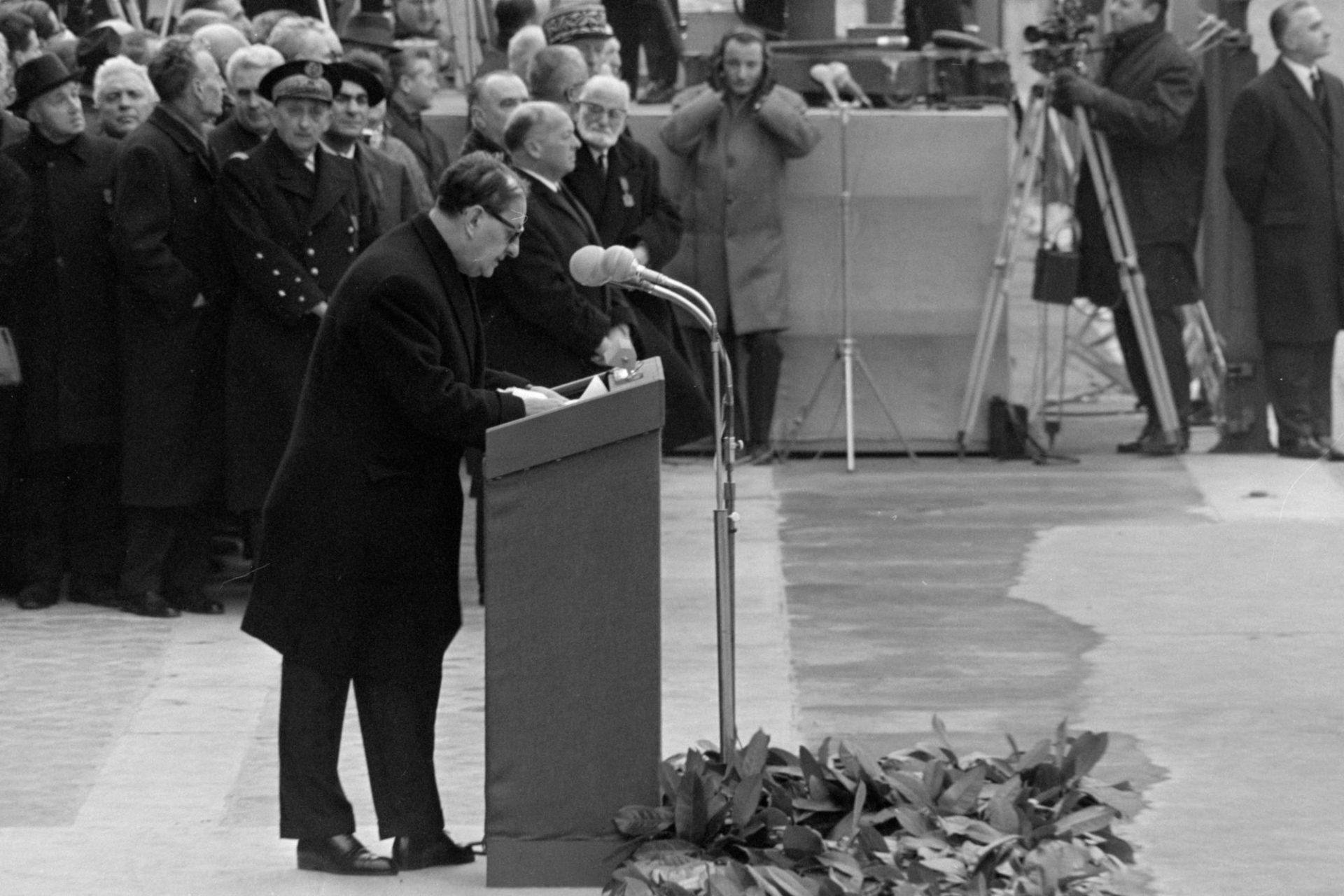
- The speech was delivered on December 19, 1964, during the ceremony transferring Jean Moulin's ashes to the Panthéon.
- Malraux’s career was marked by radical transformations, moving from anti-colonial activism and armed resistance to serving as Minister of Culture.
- There has been a noticeable decline in readership of Malraux's works today compared to Albert Camus, who considered him more deserving of the 1957 Nobel Prize.
Historical and literary memory is subject to fickle rules, and perhaps the life and intellectual trajectory of the late French writer and minister André Malraux (1901–1976) represents the clearest example of this. While history preserves the echo of his resounding words on December 19, 1964, during the transfer of the remains of French Resistance leader Jean Moulin to the Panthéon, the current cultural reality raises questions about the present standing of one of the past century's most prominent literary figures.
A Journey Full of Transformations and Confrontations
André Malraux, a self-taught figure who never obtained a high school diploma (baccalauréat), lived a life full of paradoxes and dramatic milestones. He emerged as an exceptional writer, winning the Prix Goncourt in 1933 for his renowned novel "Man's Fate" (La Condition humaine). His roles ranged from an antiquities plunderer in Khmer temples to an anti-colonial pioneer and supporter of revolutionary thought.
His adventures did not stop there; he mobilized as an anti-fascist intellectual to fight Franco's regime in Spain, and later took up arms as an active resistance fighter against the Nazi occupation under the nom de guerre "Colonel Berger." After the liberation of France, the Companion of the Liberation shifted toward the right, becoming one of the principal pillars of the Gaullist regime and an unconventional Minister of Culture.
The Nobel Paradox and Literary Immortality
When writer Albert Camus was awarded the Nobel Prize in Literature in 1957, he humbly remarked: "Malraux was the one who deserved it!" However, the scales of attention have shifted over the decades; while Camus's quotes continue to dominate the cultural scene and readers continue to embrace his texts, reading of Malraux's novels and his dense, enigmatic prose has waned, leaving his most prominent presence etched in his grand political and national speeches, foremost among them his tribute to Jean Moulin and the icons of the Resistance.
Source: Nouvelobs



Comments (0)
You must log in to comment on articles.
Log in Sign upBe the first to comment on this article.